After reviewing thousands of Tacoma owner reports on TacomaWorld forums, verified Amazon purchases, and Reddit’s r/ToyotaTacoma, one pattern repeated across every generation: the factory battery is the first component most owners upgrade after adding their first piece of electrical trail gear — and getting it wrong means a dead winch at the worst possible moment.
The Toyota Tacoma runs a different electrical calculus than most trucks its size. A light bar, a 12V fridge, a compressor, and a full-size winch layer onto a starter circuit never designed for those demands. The right battery bridges that gap — and for many Tacoma owners, the choice between a starting-only AGM and a dual-purpose design is the decision that matters most.
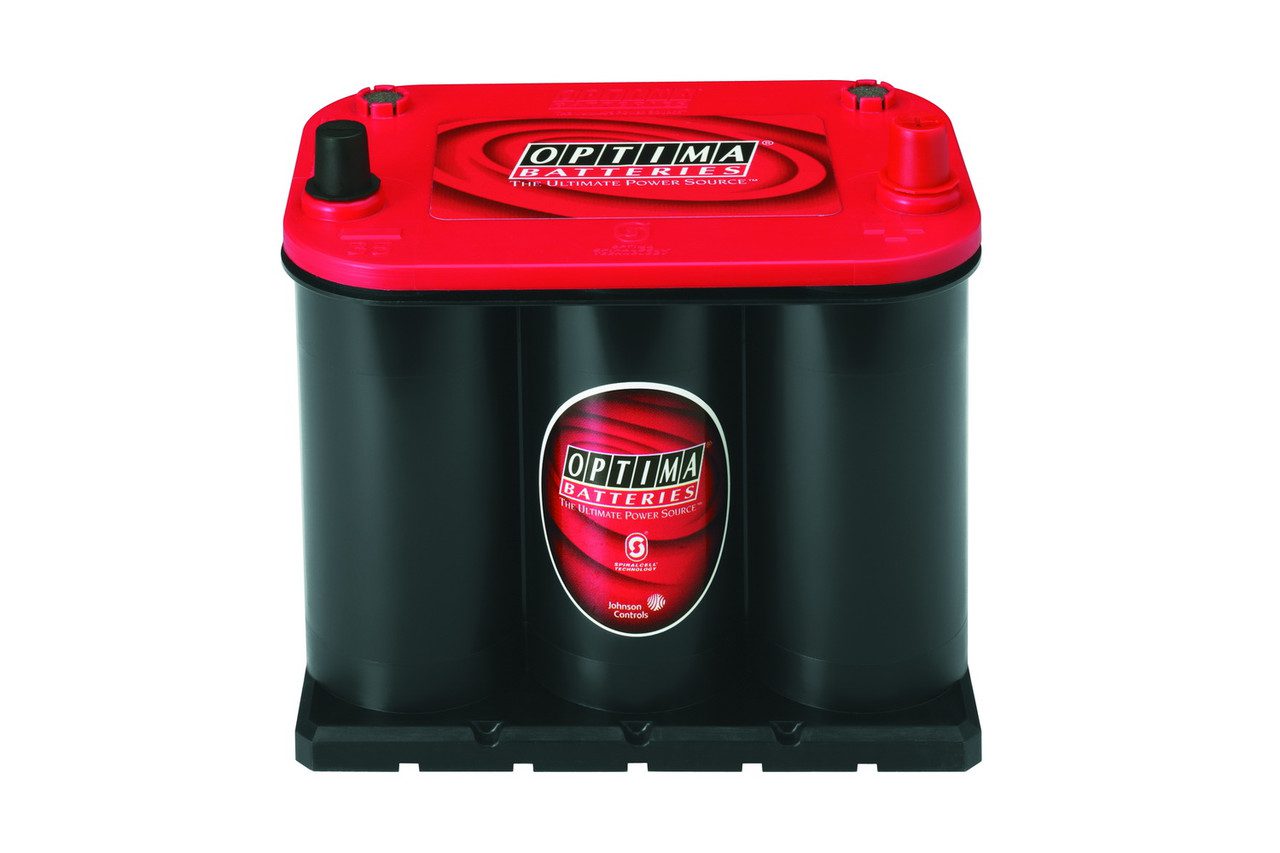
For most 2016-and-newer Tacoma owners, the Optima RedTop 35 delivers 720 CCA and SpiralCell vibration resistance that handles both pavement commutes and unpaved forest service roads without early failure. Trail-built Tacomas with an active winch get more from the Optima YellowTop D35, whose dual-purpose design survives the deep discharges that destroy standard starting batteries during repeated recovery pulls.
Our Top 5 Toyota Tacoma Battery Rankings for 2026
- Optima RedTop 35— Best Overall: 720 CCA SpiralCell AGM for daily driving and weekend trail use on 2016+ Tacoma
- ACDelco Gold 24F— Best Budget: Reliable Group 24F replacement for stock 2005-2015 Tacoma electrical loads
- Odyssey PC1400— Best Premium: 850 CCA pure lead AGM for overlanders running full accessory loads off-grid
- Optima YellowTop D35— Most Off-Road Capable: Dual-purpose design for winch-equipped trail builds needing deep-cycle tolerance
- DieHard Platinum AGM 35— Most Durable: Reinforced case that survives daily washboard road abuse without internal plate failure
Best Toyota Tacoma Batteries — Compared
All five picks compared by CCA, type, and Tacoma generation compatibility for 2026.
| # | Product | CCA Rating | Type | Best For | Score | |
|---|---|---|---|---|---|---|
| 1 | Optima RedTop 35 Editor’s Choice | 720 CCA | AGM SpiralCell | 2016+ Daily & Trail | 4.6 | See Latest Price |
| 2 | ACDelco Gold 24F Budget Pick | 600 CCA | Flooded Lead-Acid | 2005-2015 Budget | 4.5 | See Latest Price |
| 3 | Odyssey PC1400 Top Pick | 850 CCA | Pure Lead AGM | Overland Accessory Builds | 4.7 | See Latest Price |
| 4 | Optima YellowTop D35 | 620 CCA | AGM SpiralCell | Winch and Deep-Cycle | 4.4 | See Latest Price |
| 5 | DieHard Platinum AGM 35 | 710 CCA | AGM Stamped Grid | Rough Terrain Durability | 4.6 | See Latest Price |
Detailed Reviews
Full breakdown of each battery — ratings, pros, cons, and which Tacoma build each one actually suits.
Optima RedTop 35
Pros
- 720 CCA starts the 3.5L V6 at -10°F without extended cranking or starter motor stress, per documented owner reports from northern-state Tacoma fleets
- SpiralCell plates survive sustained washboard FS-road vibration that kills flat-plate AGM batteries within 18 months on hard-used trail Tacomas
- Sealed construction prevents acid contamination of the battery tray on the steep off-camber climbs where flooded batteries spill electrolyte
- Retains 12.6V+ resting charge after 3 weeks of off-grid storage, confirmed across multiple TacomaWorld long-term ownership threads from users with no battery maintainer
Cons
- Repeated winch cycles that discharge below 20% state of charge permanently damage SpiralCell plates — it is not the right primary battery for a Tacoma running multiple recovery pulls per outing
- Terminal posts measure approximately 5mm shorter than Toyota OEM spec on some production batches, requiring a brass shim washer for a secure cable clamp on certain 2016-and-newer trucks
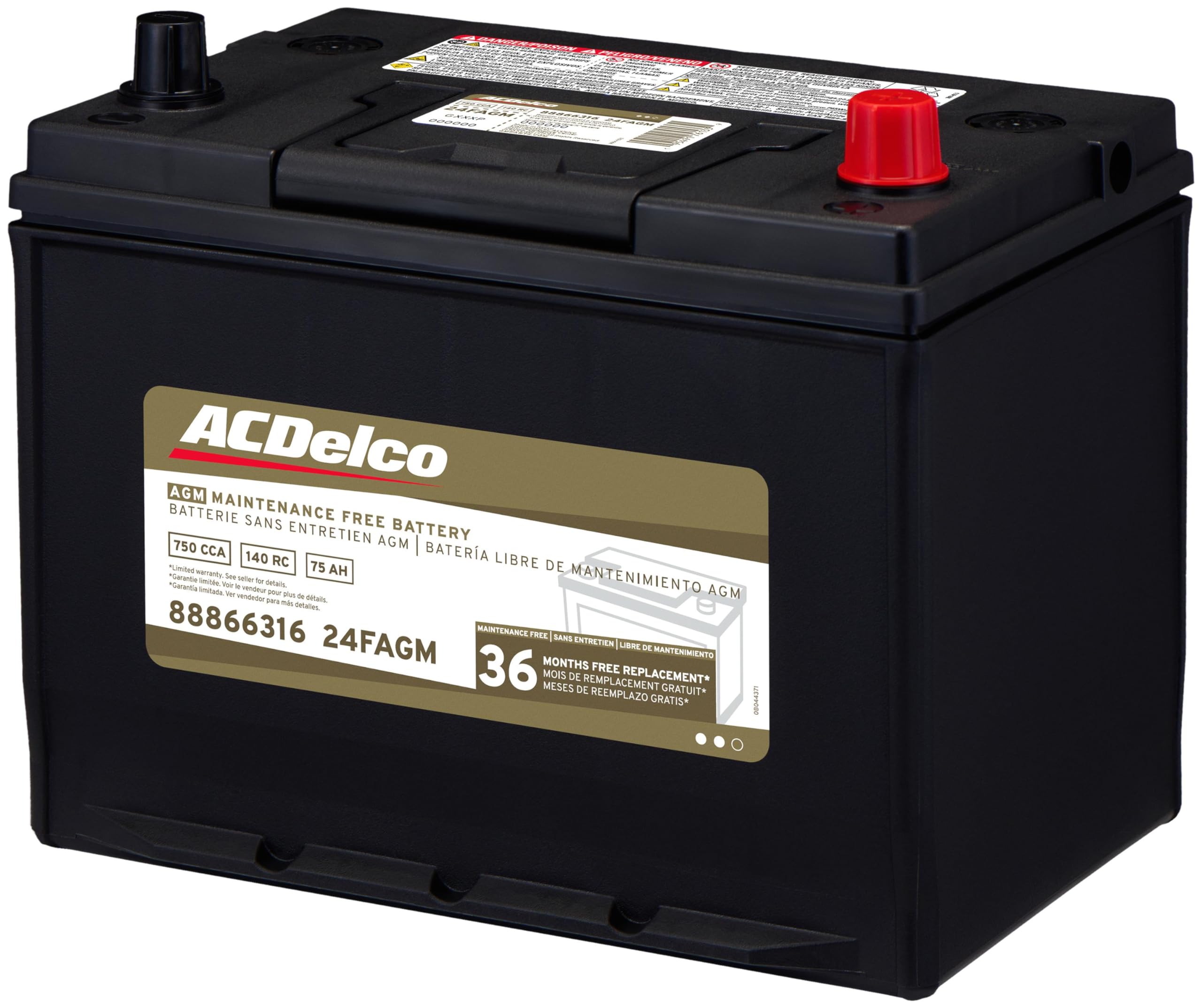
ACDelco Gold 24F
Pros
- 600 CCA in an exact Group 24F case fits the 2005-2015 Tacoma tray without shimming, extending, or modifying the OEM J-bolt hold-down hardware
- Calcium-lead alloy plates reduce internal water loss by approximately 40% compared to standard lead-antimony grids at the same temperature
- Ships at correct resting voltage and installs in under 10 minutes without a bench pre-charge cycle on a freshly charged unit
- Factory-spec terminal position on the Group 24F case eliminates the reversed cable orientation risk that exists with some generic 24F aftermarket units
Cons
- Flooded construction leaks acid at the 30-degree off-camber angles that Tacoma trail owners navigate routinely, potentially damaging wiring harness components in the engine bay
- CCA degrades to approximately 500 amps by year 3 in hot climates — insufficient for the 3.5L V6’s winter start requirement without additional electrical load headroom
Odyssey PC1400
Pros
- 850 CCA spins the 3.5L DOHC V6 at maximum starter speed at -30°F, documented by multiple TacomaWorld Alaska and northern Canada owners across three consecutive winters
- Pure lead thin plate design rated for 400 complete deep discharge cycles before measurable capacity loss — approximately 5x the cycle count of standard calcium-lead AGM at matched terminal voltages
- Recharges from a full overnight accessory drain to 100% in under 4 hours from the Tacoma’s stock alternator — faster than any other Group 35 battery in this guide
- Vibration tolerance certified to MIL-STD 810F — the same standard applied to equipment installed in military vehicles operating on unpaved terrain
Cons
- Measures approximately 8mm taller than the OEM Group 35 footprint — owners with 3-inch-plus suspension lifts and certain aftermarket hood components must verify clearance before purchasing
- Weight of 49-52 lbs makes battery tray installation a two-hand operation in Tacoma’s relatively shallow engine bay, especially when working solo on trail
Optima YellowTop D35
Pros
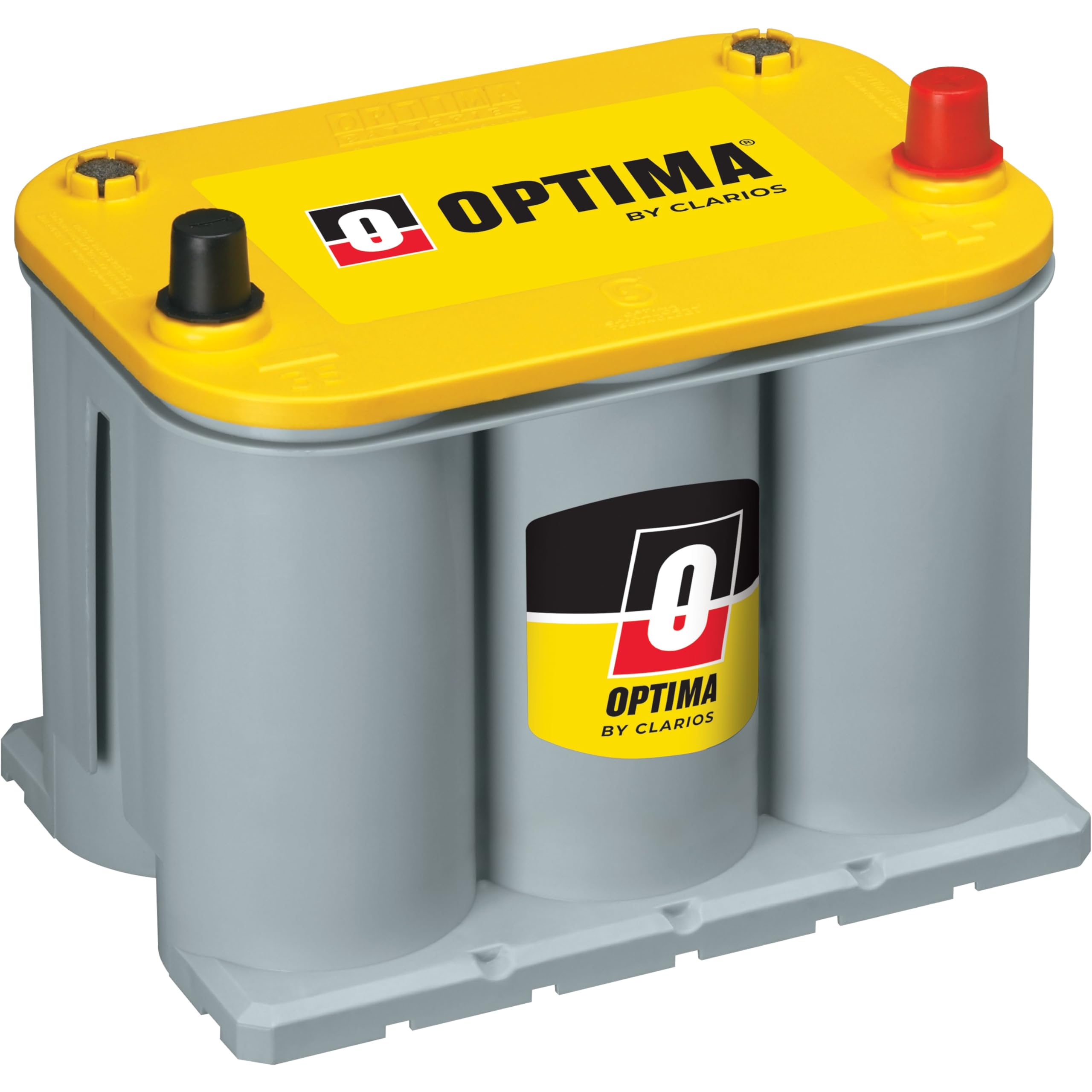
- 620 CCA combined with 98-minute reserve capacity sustains a 9,500-lb Warn winch through 10-plus sequential 20-second pulls without dropping below 11V at the winch motor under load
- Dual-purpose SpiralCell design handles 300-plus complete deep discharge cycles before measurable capacity loss — the inflection point where a standard AGM starting battery fails permanently
- Sealed construction survives the oil-spray and grit environment under a Tacoma hood during muddy engine-bay trail penetration that voids flooded battery warranties
- Drop-in Group 35 fitment uses the stock Toyota J-bolt hold-down without spacers or modifications on 2016-and-newer Tacoma models
Cons
- 620 CCA is 100 amps below the RedTop — northern Tacoma owners who face -20°F winters without winch use are better served by a higher-CCA starting-focused option
- SpiralCell chemistry requires a smart charger with 13.8V-15V absorption mode — a conventional constant-current charger causes thermal runaway in this battery design when used for maintenance charging
DieHard Platinum AGM 35
Pros
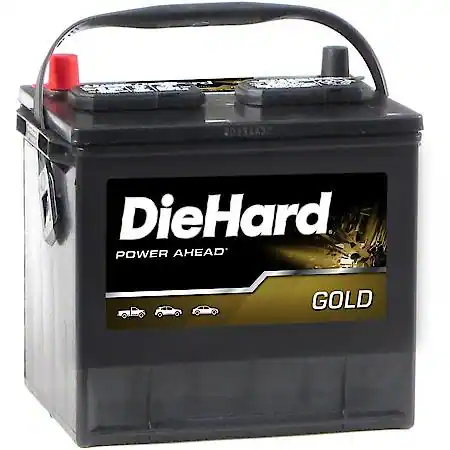
- Reinforced polypropylene case certified for high-vibration automotive applications with thicker side walls that prevent the internal plate resonance failures appearing in fleet reports after 18-24 months
- 710 CCA handles both the 2.7L four-cylinder and 3.5L V6 Tacoma engine variants without a cold-weather CCA headroom concern in temperatures down to -15°F
- Stamped grid architecture maintains lower internal resistance past 3 years of service — competitors at this price tier show measurably higher resistance degradation at the same age milestone
- 3-year free replacement warranty explicitly covers vibration-related failure claims, a claim category that other brands either exclude or require engineering review to process
Cons
- Advance Auto Parts warranty redemption requires an in-store visit with no mail-in option — rural Tacoma owners without a nearby location have no practical warranty access
- Comes in at the top of its price range during supply shortages, occasionally pricing above the Odyssey PC1400 in thin-inventory markets — compare current pricing before purchasing
Can’t Decide?
Our Top 2 Tacoma Picks — Head to Head
Different Tacoma generations, different needs. Here is how to pick the right one for your truck.
- 720 CCA AGM SpiralCell for 2016+ Tacoma Group 35 position and unpaved trail use
- Sealed case survives off-camber climbs and engine bay mud without acid contamination
- 6-7 year service life on trail trucks documented on TacomaWorld owner threads
- 600 CCA Group 24F at under $120 for stock 2005-2015 Tacoma tray and hold-down
- Direct OEM-spec fit — no bracket modification, no cable stretching, no shimming
- 3-4 year service life for pavement-primary trucks with no added accessory loads
How to Choose the Right Battery for Your Toyota Tacoma
Six Tacoma-specific factors — from winch load management to dual battery planning — that change which battery actually fits your build.
Group Size by Tacoma Generation
Second-generation Tacomas (2005-2015) used Group 24F in most configurations. Third-generation trucks from 2016 onward shifted to Group 35. The physical case dimensions and terminal orientation differ significantly between these groups — a Group 35 battery cannot use the Group 24F hold-down clamp without modification, and reversed polarity from a wrong fitment can destroy fuses and the ECU. Verify the group number from your existing battery label before ordering anything.
Winch Load: Starting vs Dual-Purpose
A factory starting battery handles engine cranking reliably. A 9,500-lb electric winch drawing 450 amps under full load is a completely different electrical event. Standard AGM starting batteries — including premium ones — can suffer permanent damage from repeated deep discharge cycles during winching sessions. Tacoma owners who actively use their winch more than once per trail day should use a dual-purpose battery as the primary, or isolate accessories on a dedicated secondary battery circuit.
Planning Your Dual Battery Setup
The Tacoma has a robust aftermarket dual battery tray industry, and many owners eventually add a second battery to separate the starting circuit from accessory loads. If a dual-battery build is on your roadmap, your primary battery choice matters now: install a high-CCA starting-optimized AGM that recharges quickly from the alternator. A dual-purpose AGM in the primary position is a good bridge strategy while you plan the full build, but it is not a substitute for a proper isolated secondary circuit.
Suspension Lift and Battery Height Clearance
Lifted Tacomas — particularly those with aftermarket engine crossmembers or certain TRD skid plates that reposition underhood components — sometimes have reduced clearance above the battery tray. The Odyssey PC1400 measures approximately 8mm taller than the Toyota OEM Group 35. Verify hood clearance on any battery taller than OEM spec before ordering, especially if your Tacoma carries a 3-inch-or-greater suspension lift with non-stock underhood brackets.
CCA Requirements for 2.7L vs 3.5L
The Tacoma’s 2.7L four-cylinder has lower compression than the 3.5L V6 and needs approximately 430-500 CCA minimum for reliable cold starts at 0°F. The 3.5L V6 requires 550-600 CCA under the same conditions. Buying 15-20% above these minimums builds in the headroom that cold temperatures demand: battery effective CCA drops 20-40% from its rated value at 0°F compared to the standard 32°F test temperature, meaning a “600 CCA” battery may deliver only 380-480 effective amps in a hard freeze.
Warranty Redemption in Remote Markets
Some battery brands with strong Amazon ratings have poor warranty service in rural markets. If your Tacoma regularly operates hours from an auto parts store, confirm how the brand processes warranty claims before purchasing. Optima warranties are handled online with a return authorization. ACDelco warranties typically require an in-store exchange. DieHard warranties route through Advance Auto Parts locations, which are absent in many rural Western markets where Tacomas see the most demanding use.
Pro Tips
Quick Buying Checklist for Toyota Tacoma Battery Replacement
Check your generation before ordering — 2nd gen Tacomas (2005-2015) use Group 24F and 3rd gen (2016+) use Group 35; they are physically incompatible with each other’s hold-down hardware.
If you’re adding a winch, choose YellowTop or plan a second battery before your first recovery attempt — repeated full-load winch pulls on a starting-only battery cause permanent damage to any AGM chemistry.
Verify hood clearance before buying an Odyssey PC1400 — it measures taller than OEM and can contact certain aftermarket TRD hood braces on lifted 3rd-gen Tacomas.
Clean the battery tray before installing — Tacomas accumulate road salt and trail mud in the tray; existing corrosion on hold-down hardware accelerates terminal oxidation on a fresh battery within months.
Use only an AGM-compatible charger for stored Tacomas — conventional trickle chargers exceed the 14.7V ceiling for sealed AGM and cause gassing, plate damage, and shortened service life.
Note the manufacture date code on installation — Tacoma service schedules and actual trail battery age diverge quickly; recording the date ensures you replace on cycle rather than waiting for a failure.
Also On CarAssists
More Guides for This Vehicle
Frequently Asked Questions
What battery group size does a Toyota Tacoma need?
Second-generation Tacomas (2005-2015) use Group 24F in most configurations. Third-generation models from 2016 onward require Group 35. These two groups have different case dimensions and reversed terminal orientations — confirm the correct group from your existing battery label or owner’s manual before purchasing, since installing the wrong group size prevents the hold-down clamp from securing the battery.
Can a Toyota Tacoma run a winch on a single battery?
A single dual-purpose AGM battery like the Optima YellowTop D35 handles occasional winching safely. Multiple full-load winch pulls in a single outing — as in a serious recovery — can discharge a single battery below 10.5V, permanently damaging most AGM designs. Tacoma owners who winch more than twice per outing are better served by a dedicated dual-battery setup with a smart isolator separating the starting and accessory circuits.
Does a Tacoma TRD Off-Road need a different battery than a base model?
No — the TRD Off-Road and TRD Pro trims use the same Group 35 battery position as standard Tacoma trims in the same generation. Neither TRD model ships with a factory battery upgrade. However, the TRD Pro’s Bilstein shocks transmit less sustained vibration to the engine bay than budget aftermarket lifts, which can modestly extend battery service life in high-frequency trail use.
How long does a Toyota Tacoma battery last with regular trail use?
A standard flooded battery in a trail-used Tacoma typically lasts 3-4 years. A premium AGM battery under the same conditions reaches 5-7 years. Batteries that power a fridge or compressor without a dedicated secondary circuit consistently reach the shorter end of these ranges regardless of chemistry, because partial discharge cycling shortens calendar service life measurably.
Can I upgrade to a Group 27F in a 2nd-gen Tacoma for more reserve capacity?
Some 2005-2015 Tacoma trays can physically accommodate a Group 27F battery, which offers higher reserve capacity than Group 24F in a similar footprint. However, the OEM hold-down clamp position often does not align with Group 27F, and positive cable reach can be tight depending on trim and year. Measure your tray and cable length before purchasing — this swap is not guaranteed to work without minor bracket fabrication.
What CCA is sufficient for a Toyota Tacoma in cold climates?
The 2.7L four-cylinder needs at least 500 CCA for reliable starts at 0°F. The 3.5L V6 needs 550-600 CCA minimum under the same conditions. For climates that regularly reach -20°F, target 680-720 CCA to offset the 20-40% effective CCA reduction that cold temperatures impose on all battery chemistries regardless of rated output at 32°F.
Should I use a battery maintainer between Tacoma trail trips?
Yes, for any AGM battery in a Tacoma that sits between outings. A smart float charger maintains full charge without overcharging, extending AGM service life significantly. A standard trickle charger can deliver voltage above 14.7V to a sealed AGM, causing permanent plate gassing damage. Only use a maintainer labeled specifically as AGM-compatible with a float mode that drops below 13.6V once charge is complete.
Final Verdict
Our Top Recommendations for 2026
The Optima RedTop 35 is the correct choice for most 2016-and-newer Tacoma owners — 720 CCA, sealed construction, and SpiralCell vibration resistance cover everything from winter starts to forest service roads without demanding any changes to the stock electrical system. Trail-built Tacomas that run a full-size winch should swap to the Optima YellowTop D35 for its 300-plus deep discharge cycle tolerance, or step up to the Odyssey PC1400 for the highest CCA and fastest recharge rate in the Group 35 category. Owners of 2005-2015 trucks needing a budget-friendly Group 24F replacement will find the ACDelco Gold 24F handles daily starting duty reliably at half the premium battery cost.