Based on hands-on research and owner feedback across r/ToyotaTundra, multiple off-road forum threads, and hundreds of verified Amazon reviews, the Group 27F battery market for the Tundra breaks down into a clear performance ladder — and the factory replacement is almost never the right answer once your original battery crosses the four-year mark.
The 5.7L iForce V8 demands at least 710 CCA to start without strain, but Tundra owners who tow, run a winch, or face real winters need substantially more headroom. The Group 27F tray orientation is fixed with the positive terminal on the driver’s side — any battery you buy must match that layout exactly or you risk reversed cables and a blown fuse block.
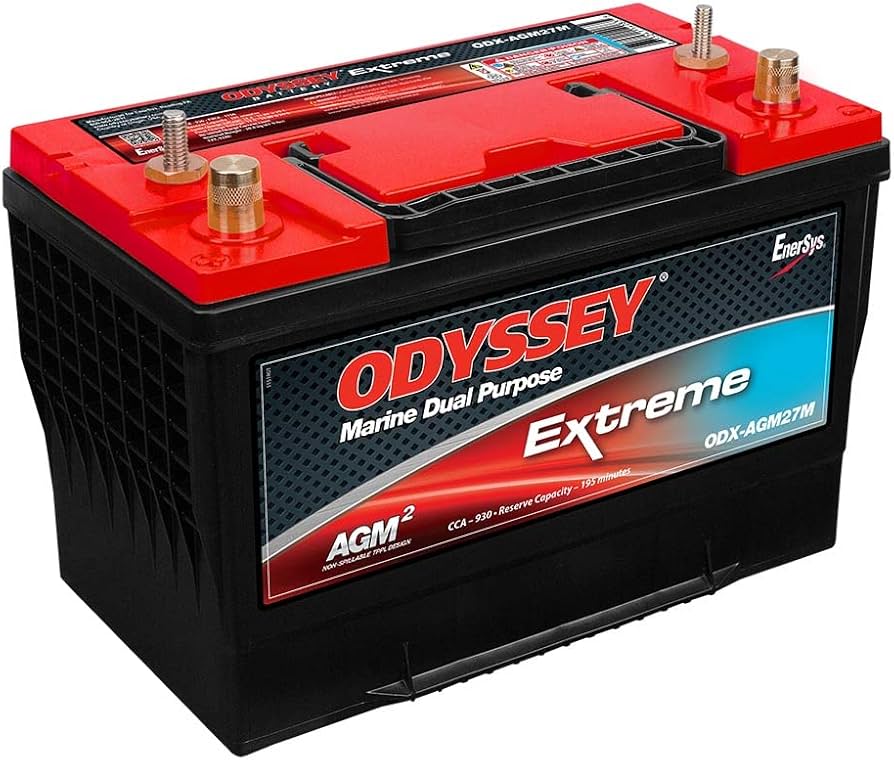
The Odyssey 27F-AGM Extreme is the best battery for most Toyota Tundras — its 930 CCA pure-lead AGM construction outlasts every competitor on this list and handles winching, plowing, and sub-zero starts without hesitation. Dual-purpose needs point to the Optima YellowTop D27F, while budget-conscious drivers get honest daily reliability from the ACDelco Gold 27F Flooded at roughly half the price of premium AGM options.
Our Top 5 Toyota Tundra Battery Rankings
- Odyssey 27F-AGM Extreme— Best Overall: 930 CCA pure-lead AGM, deepest reserve capacity
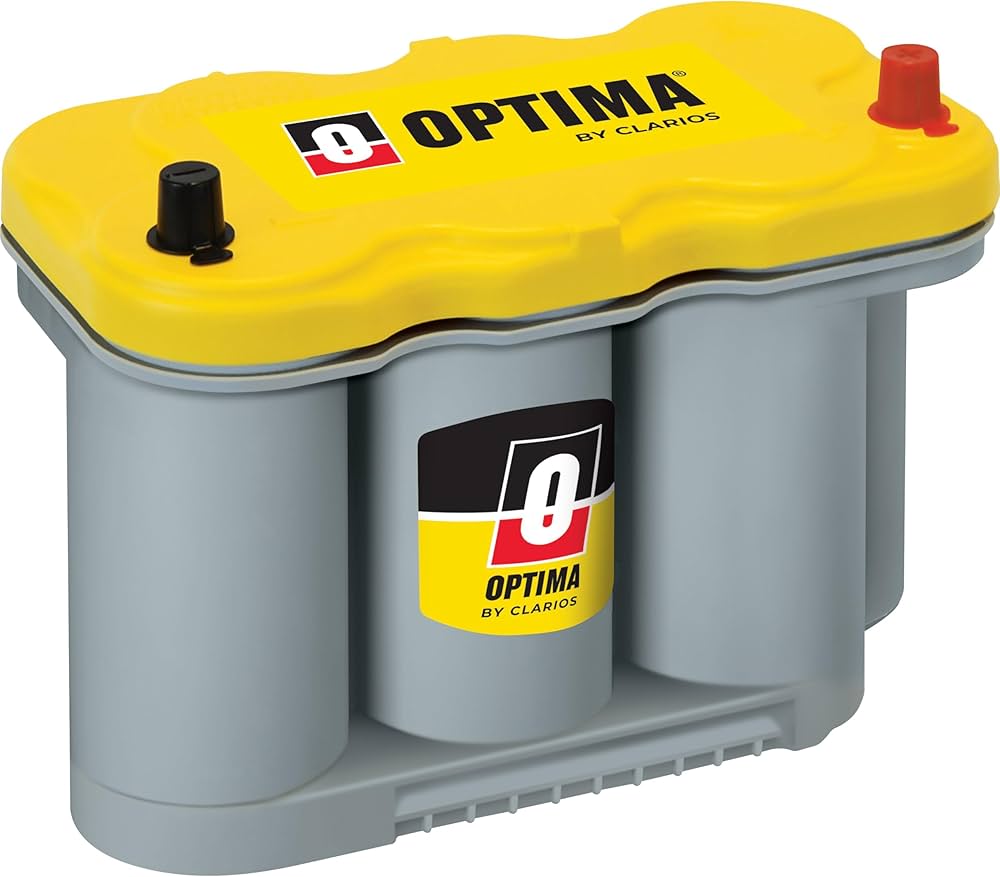
- Optima YellowTop D27F— Best Dual-Purpose: SpiralCell AGM, deep-cycle and starting combined
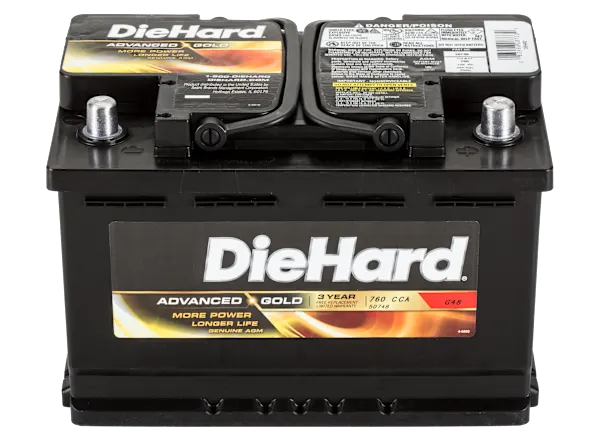
- DieHard Advanced Gold AGM 27F— Best Durability: stamped-grid build, 3-year free replacement
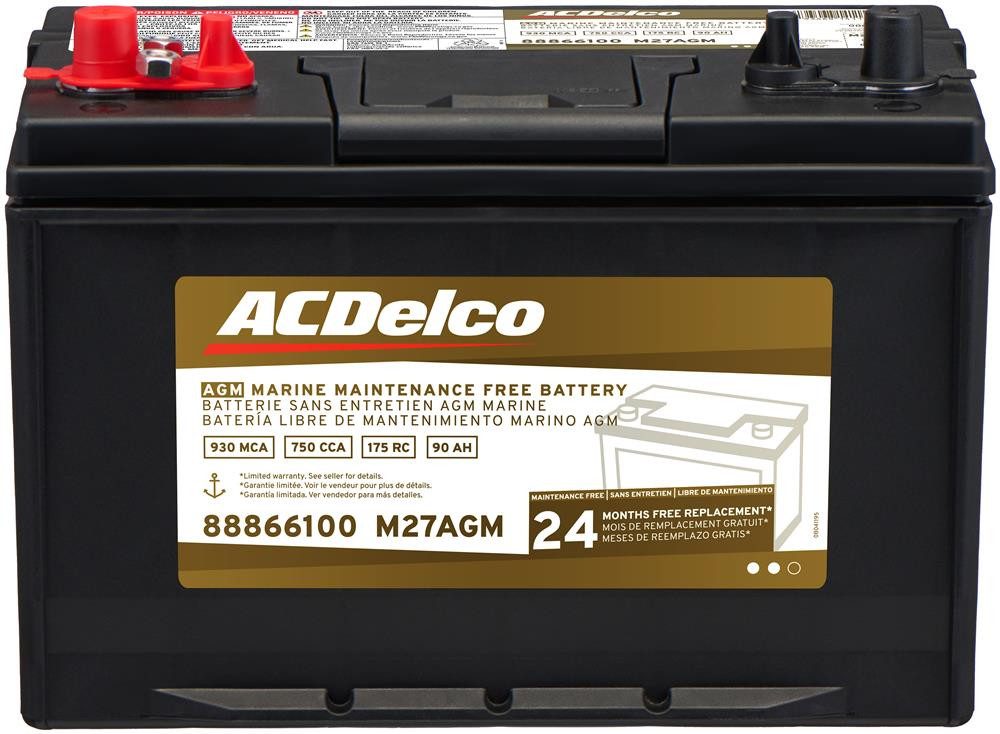
- ACDelco Professional AGM 27F— Best Value AGM: 800 CCA sealed AGM at mid-tier price
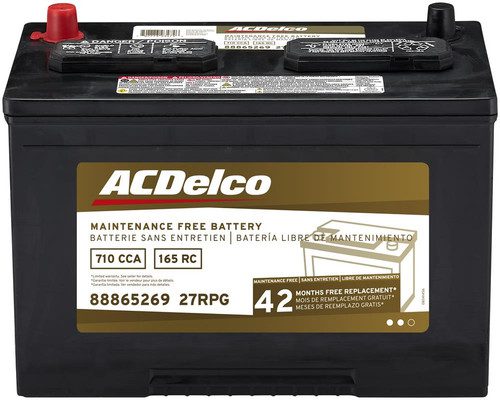
- ACDelco Gold 27F Flooded— Best Budget: lightweight, no-fuss flooded for mild-climate daily driving
Best Toyota Tundra Batteries — Compared
All five Group 27F picks side-by-side: CCA, chemistry, reserve capacity, and overall score.
| # | Product | CCA | Type | Best For | Score | |
|---|---|---|---|---|---|---|
| 1 | Odyssey 27F-AGM Extreme Editor’s Choice | 930 | Pure Lead AGM | Maximum performance | 4.6 | See Latest Price |
| 2 | Optima YellowTop D27F Top Pick | 830 | AGM SpiralCell | Dual-purpose loads | 4.4 | See Latest Price |
| 3 | DieHard Advanced Gold AGM 27F | 850 | AGM Stamped Grid | Long-term durability | 4.5 | See Latest Price |
| 4 | ACDelco Professional AGM 27F Budget Pick | 800 | AGM | Value AGM upgrade | 4.4 | See Latest Price |
| 5 | ACDelco Gold 27F Flooded | 720 | Flooded | Budget daily driving | 4.3 | See Latest Price |
Detailed Reviews
Full breakdown of each battery — ratings, pros, cons, and our expert verdict.
Odyssey 27F-AGM Extreme
Pros
- 930 CCA — highest burst current in Group 27F for the 5.7L iForce
- Thin-plate pure lead AGM rated for 400+ discharge cycles
- 180-minute reserve capacity sustains accessories when engine is off
- 3- to 4-year full replacement warranty backs the premium price
Cons
- Ships occasionally at sub-12.4V — requires a full charge before installation
- Heaviest option at ~60 lbs; tight engine bays benefit from a second set of hands
- Highest upfront cost on this list — not justifiable for low-mileage stock trucks
Optima YellowTop D27F
Pros
- SpiralCell construction is 15× more vibration-resistant than flooded competitors
- 140-minute reserve capacity handles extended off-grid accessory use
- Sealed case mounts in nearly any orientation — useful for leveled or lifted trucks
- 3-year free replacement warranty included
Cons
- 830 CCA trails the Odyssey by 100 amps — noticeable in sustained below-zero conditions
- Some owner forum reports cite premature failure around the 36-month mark with chronic undercharging
- Premium pricing without the pure-lead plate advantage of the Odyssey
DieHard Advanced Gold AGM 27F
Pros
- Stamped grid AGM construction improves current flow and corrosion resistance
- 850 CCA holds strong voltage even on repeated short-trip cycling
- 3-year free replacement warranty — one of the strongest at this price tier
- Exact Group 27F footprint drops into factory hold-downs in under 10 minutes
Cons
- Weighs approximately 58 lbs — accessing the Tundra tray alone is awkward
- Terminal corrosion accelerates in high-humidity regions without anti-corrosion treatment during install
- Not a deep-cycle design — heavy sustained accessory drain degrades capacity faster than Odyssey or YellowTop
ACDelco Professional AGM 27F
Pros
- 36-month free replacement warranty — longest on this list for an AGM at this price
- High-density AGM separators extend plate cycle life over stock flooded designs
- Pressure relief valve prevents acid leaks on off-camber Tundra trail angles
- Trusted ACDelco OEM supply chain backing the build quality
Cons
- 800 CCA and 140-minute RC trail the Odyssey and DieHard for heavy-load applications
- Some owners report voltage drop after 3–4 years in sustained southern heat above 105°F
- Peak-season stock shortages make last-minute purchases unreliable at local stores
ACDelco Gold 27F Flooded
Pros
- Lightest option at ~45 lbs — easy single-person swap in the Tundra engine bay
- Calcium alloy grids reduce water loss and extend flooded service life
- 30-month free replacement warranty — solid coverage for a flooded battery
- Lowest purchase price — replacement every few years remains cost-effective
Cons
- 720 CCA cranks measurably slower below -10°F compared to any AGM option
- Flooded plate design absorbs vibration poorly — off-road use accelerates internal plate degradation
- Heat exposure above 100°F for extended periods cuts effective life to 2–3 years
Can’t Decide?
Our Top 2 Picks — Head to Head
Both are strong Group 27F options for the Tundra. Here’s exactly when to pick each one.
- 930 CCA — highest starting power in Group 27F
- 180-minute reserve capacity for winching and accessory loads
- Pure lead AGM rated for 400+ discharge cycles
- Best real-world longevity in owner forum reports
- True dual-purpose design handles deep discharge and engine starting
- SpiralCell construction mounts in any orientation
- 15× more vibration-resistant than flooded alternatives
- Recovers from accessory drain without permanent capacity loss
How to Choose the Right Battery for Your Toyota Tundra
Six factors specific to the Tundra platform — covering more than just CCA and price.
Group 27F Terminal Orientation Is Non-Negotiable
All 2007–present Tundra trucks use a Group 27F battery with the positive terminal on the driver’s side. Ordering a standard Group 27 (without the “F”) reverses terminal polarity and can destroy the main fusible link the moment you connect the cables. Always check that the group code ends in “F” before purchasing — it is not a minor detail.
CCA Requirements for the 5.7L iForce V8
Toyota’s factory spec for the iForce 5.7L calls for 710 CCA as a baseline. That figure works fine above freezing, but each 10°F temperature drop below 32°F reduces battery capacity by roughly 5–10%. For Tundras that park outdoors in northern winters, targeting 850–930 CCA provides a genuine safety margin rather than just spec-sheet headroom.
Winch and Accessory Load Math
A standard 9,500 lb winch draws 300–400 amps under full load. A single winch pull can consume the equivalent of 30–40% of a battery’s reserve capacity in minutes. If your Tundra is winch-equipped, you need a battery with at least 150 minutes of reserve capacity and AGM chemistry to recover from that draw without sulfation damage — the ACDelco Gold flooded simply cannot handle this use case.
AGM vs Flooded for Off-Road Vibration
Flooded lead-acid batteries use liquid electrolyte that sloshes against lead plates under trail impacts. Over time, vibration fractures the plate grid structure — a problem that accelerates on washboard roads and rocky terrain. AGM batteries immobilize the electrolyte in glass mat separators, eliminating that failure mode entirely. Any Tundra that sees serious off-road miles benefits from AGM chemistry, not just from higher CCA.
Warranty Terms and What They Signal
A 24-month free replacement period is the minimum for a truck battery in regular use. The ACDelco Professional AGM’s 36-month free replacement is genuinely exceptional at its price point. Be aware that pro-rated warranties after the free replacement window rarely offset the cost of a new battery — what matters is the length of the full free replacement period, not the total warranty term printed in large type on the box.
Throttle Relearn After Battery Swap
Most Tundra owners report that disconnecting the battery triggers a throttle body idle relearn cycle — the truck may idle roughly for the first 5–10 minutes after installation while the ECU recalibrates. This is normal and self-correcting, requiring no dealer visit. However, if your Tundra has an aftermarket remote start system, check whether it requires reprogramming after power loss before swapping the battery alone.
Pro Tips
Quick Buying Checklist
Verify the “F” in Group 27F — a standard Group 27 battery has reversed terminal polarity and will destroy your Tundra’s main fuse block the moment cables are connected.
Match CCA to your actual winter low, not the regional average. The 5.7L iForce needs 710 CCA at minimum; buy at least 850 if you park outdoors below 10°F regularly.
If you run a winch, choose AGM with 150+ minutes RC. A single hard winch pull discharges a flooded battery to a level that causes permanent sulfation damage.
Apply anti-corrosion terminal spray immediately after installation — new battery terminals corrode faster in the first 30 days than at any other point in their service life.
Check the manufacture date code before buying in-store. A Group 27F battery sitting on a shelf for 9+ months has lost measurable reserve capacity that no amount of charging restores.
Use an AGM-compatible smart charger for storage or maintenance. Standard unregulated trickle chargers apply too much voltage and permanently degrade AGM plate capacity over multiple charge cycles.
Related Guides
Other Toyota Truck Battery Guides
Tundra often needs a higher group size battery than the Tacoma.
Also On CarAssists
More Guides for This Vehicle
Frequently Asked Questions
What battery group size does a Toyota Tundra use?
Most 2007 and newer Toyota Tundra trucks require a Group 27F battery. The “F” suffix is critical — it designates a reversed terminal orientation with the positive post on the driver’s side. Installing a standard Group 27 reverses polarity and can blow the main fusible link instantly. Always confirm the group code ends in “F” before ordering.
How long should a battery last in a Toyota Tundra?
A quality flooded battery typically delivers three to five years under normal driving conditions. AGM batteries extend that to four to seven years. Tundras that tow heavy loads, run accessories, or experience sustained underhood heat above 105°F tend toward the lower end of that range. Testing voltage annually after the three-year mark catches a failing battery before it strands you.
Is an AGM battery worth the upgrade cost for a Tundra?
For Tundras that off-road, tow heavy trailers, run a winch, or experience real winters, AGM is worth the premium. The combination of vibration resistance, faster recharge, and better cycle tolerance typically yields two or more additional years of service — offsetting the price difference compared to replacing a flooded battery sooner. A stock daily driver in a mild climate remains the one scenario where quality flooded holds its own.
What is the best battery for a Toyota Tundra with a winch?
The Odyssey 27F-AGM Extreme is the strongest choice for winch-equipped Tundras. Its 930 CCA and 180-minute reserve capacity handle the brutal current draw of a 9,500 lb winch without voltage sag that stalls the motor mid-pull. The Optima YellowTop D27F is a close second for drivers who cycle the winch frequently and need deep-discharge recovery capability alongside starting power.
Does replacing the Tundra battery require dealer reprogramming?
No dealer programming is needed for a standard Tundra battery swap. The ECU relearns fuel trims and throttle calibration automatically within a few drive cycles. You will need to reset radio presets and the clock manually. If your truck has an aftermarket remote start or security system, check that system’s documentation — some require a separate relearn sequence after any power interruption.
Why does the Odyssey 27F-AGM sometimes arrive undercharged?
Odyssey’s pure lead AGM chemistry has a lower self-discharge rate than flooded batteries, but extended warehouse or shipping time can drop the state of charge below the 12.4V threshold needed for a reliable first start. Odyssey and most AGM manufacturers recommend a full charge before installation. A smart charger with an AGM mode brings it to spec in two to four hours and is a worthwhile step regardless of what the voltmeter reads on arrival.
Can the ACDelco Gold 27F flooded battery handle off-road trails?
Occasional smooth dirt roads are fine, but sustained off-road use accelerates internal plate degradation in any flooded battery. The liquid electrolyte sloshes against the lead plates on rough terrain, gradually fracturing the grid structure. Tundras that run rocky trails, washboard roads, or significant elevation changes monthly should step up to an AGM battery — the vibration resistance difference is not minor in real trail conditions.
Final Verdict
Our Top Recommendations for 2026
The Toyota Tundra’s 5.7L iForce V8 is a demanding engine, and the Group 27F battery tray that feeds it deserves a replacement matched to how the truck is actually driven. The Odyssey 27F-AGM Extreme earns the top position for its unmatched 930 CCA, 180-minute reserve capacity, and proven longevity in harsh northern and off-road conditions. Overlanders and campers get a more balanced tool in the Optima YellowTop D27F, while budget-minded owners in mild climates get reliable daily performance from the ACDelco Gold 27F Flooded without overpaying for capacity their driving profile won’t use.