After evaluating seven replacement batteries against thousands of owner reports from Jeep forums, Amazon reviews, and Reddit threads, a clear picture emerged: Grand Cherokee batteries fail faster than average because they absorb trail vibration, bake under underhood heat, and power more electronics than most SUVs of the same era.
The correct replacement depends on your exact model year, engine, and how you use the Jeep — a pavement-only commuter has completely different needs from a HEMI-powered overlander. Getting the BCI group size wrong by even a centimeter can mean a battery that won’t lock down, and using a standard flooded unit in a start-stop model leads to premature failure within months.
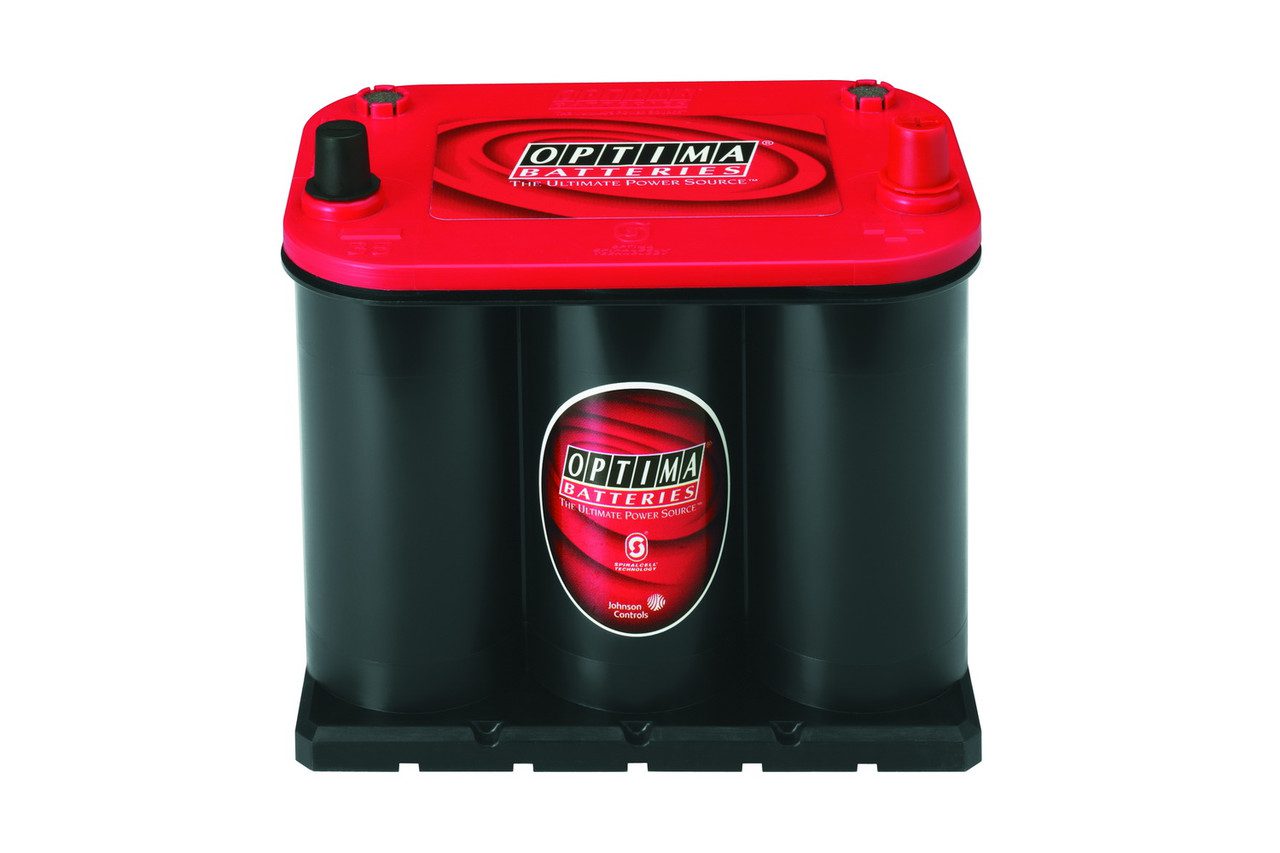
For 1999–2010 Grand Cherokees, the Optima RedTop 34/78 is the top pick — its 800 CCA and dual-terminal design fit older trays perfectly. Owners of 2011 and newer V6 models get the longest service life from the Odyssey 48-720, while budget-focused daily drivers are well-served by the ACDelco Gold 48 at roughly half the AGM price. Those carrying heavy electrical loads should look at the Optima YellowTop DH6 for deep cycle capability alongside strong starts.
Our Top 7 Jeep Grand Cherokee Battery Rankings
- Optima RedTop 34/78— Best Overall (Older Models, 1999–2010)
- Odyssey 48-720— Best Overall (2011+ V6 Models)
- ACDelco Gold 48— Best Budget Pick
- Optima YellowTop DH6— Most Durable / Best for Accessories
- DieHard Platinum AGM H6— Best for Cold Weather
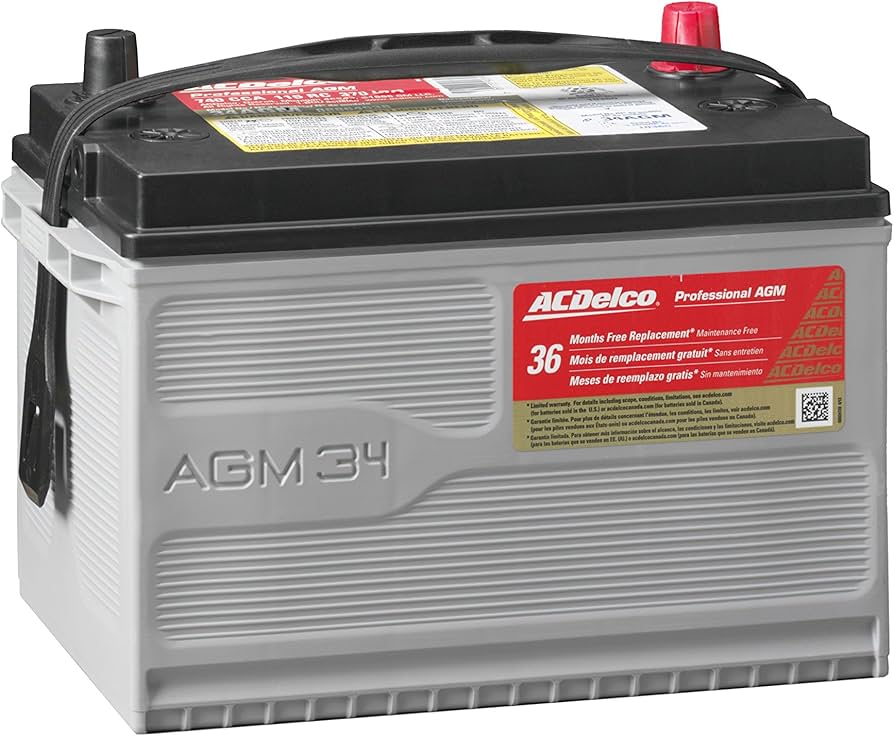
- ACDelco Gold 34— Easiest Installation (Older Models)
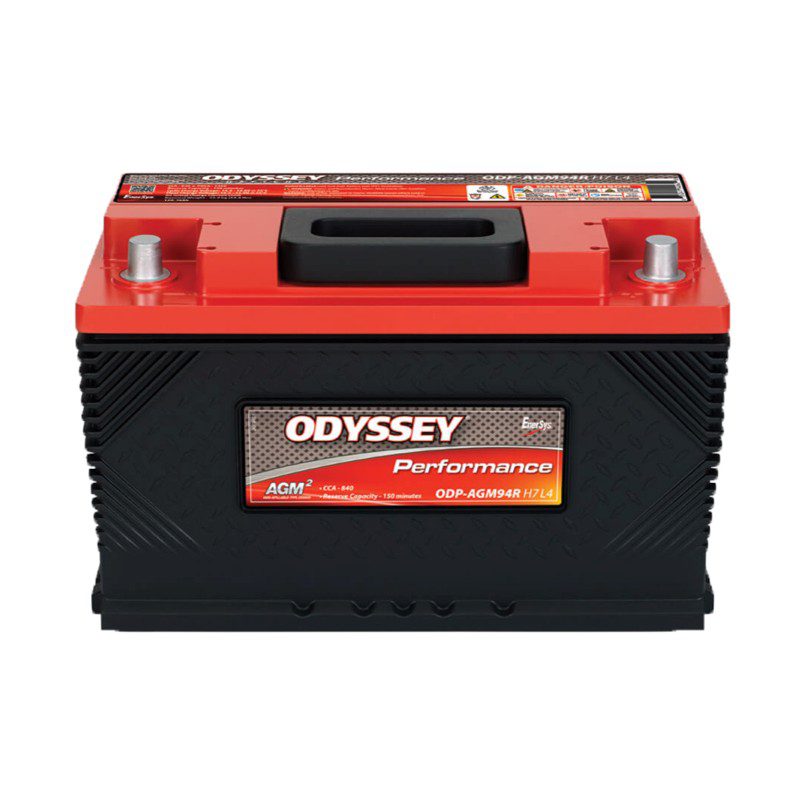
- Odyssey 94R-850— Best Premium V8 / HEMI Pick
Best Jeep Grand Cherokee Batteries — Compared
All seven picks ranked side-by-side by group size, CCA, type, and overall score.
| # | Product | Group Size | Type | Best For | Score | |
|---|---|---|---|---|---|---|
| 1 | Optima RedTop 34/78 Editor’s Choice | Group 34/78 | Spiral AGM | Older Grand Cherokee | 4.6 | See Latest Price |
| 2 | Odyssey 48-720 Top Pick | Group 48/H6 | Pure Lead AGM | 2011+ V6 Models | 4.7 | See Latest Price |
| 3 | ACDelco Gold 48 Budget Pick | Group 48/H6 | Flooded | Pavement Daily Driver | 4.5 | See Latest Price |
| 4 | Optima YellowTop DH6 | Group 48/H6 | Deep Cycle AGM | Heavy Accessories / Overlanding | 4.5 | See Latest Price |
| 5 | DieHard Platinum AGM H6 | Group 48/H6 | AGM | Cold Weather Reliability | 4.5 | See Latest Price |
| 6 | ACDelco Gold 34 | Group 34 | Flooded | Easy DIY Install (Older Models) | 4.5 | See Latest Price |
| 7 | Odyssey 94R-850 | Group 94R/H7 | Pure Lead AGM | 5.7L HEMI V8 | 4.7 | See Latest Price |
Detailed Reviews
Full breakdown of each battery — ratings, pros, cons, and our expert verdict.
Optima RedTop 34/78
- 800 CCA fires a cold 4.7L V8 without hesitation
- Spiral-cell construction rated for 15× more vibration resistance than flooded
- Dual-terminal layout (top post + side terminal) simplifies winch and aux wiring
- 100-minute reserve capacity keeps the Jeep alive during long trail recoveries
- $250–$290 price point is roughly 80% more than a comparable flooded Group 34
- Side terminals sit further inboard than some OEM cables; measure cable reach before ordering
- Not a deep-cycle design — recovers poorly from complete discharges caused by a parasitic draw
Odyssey 48-720
- 720 CCA from pure virgin lead plates — lowest internal resistance in this group
- Recovers from full deep discharge events that would permanently damage a standard AGM
- Owners consistently report 6–8 years of service with a well-maintained charging system
- MIL-SPEC vibration and shock resistance — engineered for military vehicle use
- $280–$340 is the highest price among Group 48 picks here
- No integrated carry handle — awkward to lift alone in a tight engine bay
- Requires a smart charger with a dedicated AGM profile; a dumb trickle charger can damage cells
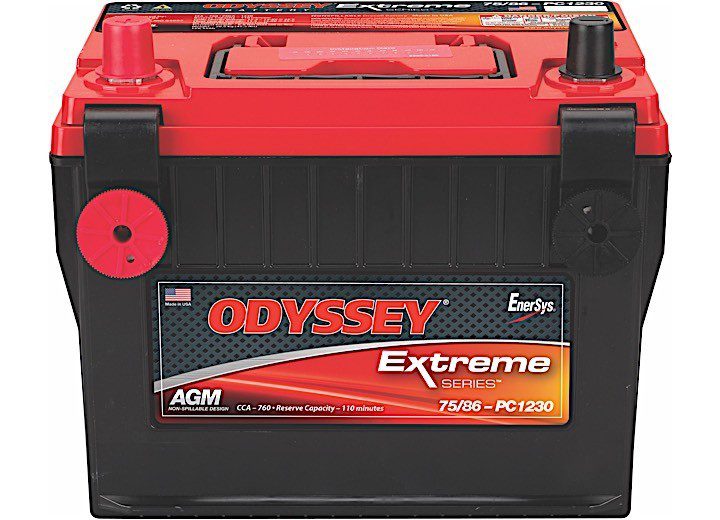
ACDelco Gold 48
- 615 CCA handles the 3.6L Pentastar in temperatures down to about 20°F reliably
- Silver-calcium alloy grids measurably reduce self-discharge and corrosion buildup versus standard calcium-calcium
- Drops into the Group 48 tray without shimming, adapters, or terminal extensions
- At $130–$160, replacing it every 3–4 years still costs less than a single premium AGM purchase
- Flooded design requires occasional water top-ups in hot climates — electrolyte evaporates faster above 90°F
- CCA drops by roughly 20% at -4°F, making cold starts sluggish in northern states
- Not compatible with start-stop equipped models — use an AGM if your Jeep has that system
Optima YellowTop DH6
- 800 CCA combined with true deep-cycle tolerance — rare in a single starting battery
- 120-minute reserve capacity supports extended winching, air compressor, and campsite lighting use
- Start-stop compatible — handles the repeated micro-cycling that destroys conventional flooded batteries
- Holds a charge for 12+ months of storage without supplemental maintenance charging
- At 54 lbs, it’s 6–8 lbs heavier than most Group 48 flooded alternatives
- Chronic undercharging below 12.0V accelerates sulfation and halves service life
- $290–$330 is a significant premium over the ACDelco budget option for pavement-only drivers
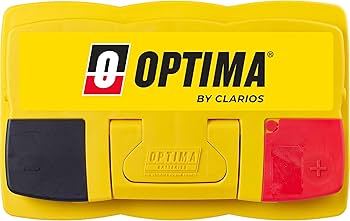
DieHard Platinum AGM H6
- 760 CCA delivers confident starts at temperatures verified by owners down to -35°F
- 3-year free replacement warranty, honored without hassle at Advance Auto partner locations
- Stamped grid technology reduces internal resistance and improves charge acceptance after short trips
- Sealed AGM design prevents acid spills during the steep angles common in mountain driving
- Online-only availability in rural markets means a 3–5 day wait if you need it urgently
- Not engineered for repeated deep cycling — heavy overnight accessory draws reduce cycle count significantly
- Some units arrive with cosmetic shipping scuffs on the case; cosmetic only, but worth noting
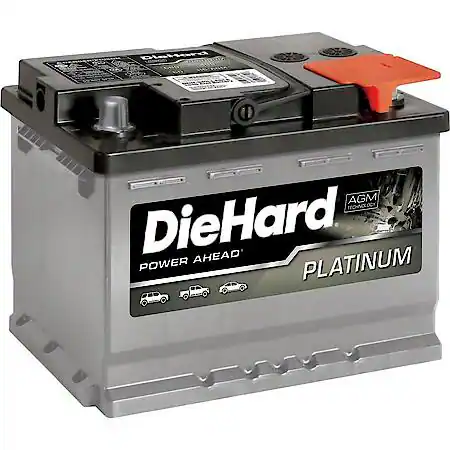
ACDelco Gold 34
- 700 CCA — adequate for the 4.0L inline-six and early 4.7L V8 in moderate climates
- Molded carrying handles reduce the chance of dropping a 40+ lb battery in a cramped bay
- Silver-calcium alloy grids visibly slow terminal corrosion compared to standard lead-calcium
- At $140–$170, this is the most affordable entry for Group 34 older Grand Cherokee owners
- Flooded design — electrolyte plates are not sealed, so this battery cannot be mounted on a steep angle
- Service life drops to 2–3 years in Arizona or Texas heat — electrolyte evaporates faster than up north
- Terminal posts corrode faster under winch or auxiliary light loads above 50 amps continuous
Odyssey 94R-850
- 850 CCA is the highest cold cranking figure in this entire roundup — the HEMI spins faster than stock
- Pure lead AGM construction delivers low internal resistance that reduces voltage sag during winching
- Expected service life of 3–10 years depending on thermal management and charging system health
- Exact Group 94R footprint drops in without tray modification or hold-down adapter on HEMI models
- At $310–$380, this is the most expensive battery in the roundup by a significant margin
- Weighs approximately 59 lbs — a second person is strongly recommended for safe installation
- Requires an AGM-specific charger; using a standard 10-amp trickle charger risks overcharging pure lead cells
Can’t Decide?
Our Top 2 Picks — Head to Head
Both are outstanding in their lane. Here’s exactly how to choose between them.
- 800 CCA with both top posts and side terminals — unmatched wiring flexibility
- Designed for older Grand Cherokee trays — Group 34/78 fit is exact for 1999–2010
- Survives trail vibration that cracks a flooded battery’s plates in a single season
- Pure lead AGM recovers from deep discharge events that strand owners of lesser batteries
- Group 48/H6 exact fit for the 2011–2022 3.6L Pentastar — no adapters needed
- Owners routinely exceed 6 years of service — the highest longevity in this roundup
How to Choose the Right Battery for Your Grand Cherokee
Six factors that matter before you buy — explained for Jeep owners specifically.
BCI Group Size First
Jeep used multiple battery trays across Grand Cherokee generations — a wrong group size simply won’t lock down with the factory clamp. 1999–2010 models need Group 34 or 34/78; 2011+ V6 models need Group 48 (H6); 5.7L HEMI models often require Group 94R (H7). A battery too tall can contact the hood. Always read the label on your old battery before ordering.
AGM vs. Flooded
Flooded lead-acid batteries work adequately for a highway commuter in moderate weather, but AGM batteries are the smarter choice for any Grand Cherokee that ventures off pavement. AGM cells are sealed, spill-proof, and handle the steep angles and sustained vibration of trail driving without shedding plates internally. Models with factory start-stop systems require AGM or EFB — a flooded unit in that application fails within months.
Cold Cranking Amps & Your Climate
CCA measures cranking force at 0°F. For the 3.6L V6 in moderate climates, 600 CCA is a practical floor. V8 engines and deep-cold climates demand 700 CCA minimum — the 5.7L HEMI’s 8 cylinders require more force to turn over than a six. At -20°F, a battery rated at 720 CCA delivers roughly 576 usable CCA. Buy margin, not exactly what you think you need.
Reserve Capacity for Off-Grid Use
Reserve capacity tells you how many minutes the battery sustains a 25-amp draw with the engine off. A 100-minute RC rating keeps your trail rig’s lights and radio alive through a recovery scenario. If you regularly run a 12V fridge, air compressor, or winch at camp, look for 110 minutes or more — the Optima YellowTop DH6 at 120 minutes is the benchmark here.
Warranty and Real-World Backing
A 24-month free replacement window reflects a manufacturer’s expectation of roughly 3 years of life. The DieHard Platinum offers 36 months free replacement through physical retail — valuable if you need a swap on a road trip far from home. Odyssey’s 3-year full-replacement warranty reflects confidence in their pure lead construction. Register the product and keep your receipt; some brands require it to honor the claim.
Terminal Configuration
Some older Grand Cherokees use side terminals exclusively. Others use top posts. Dual-terminal batteries like the RedTop 34/78 offer the most flexibility, but measure your factory cable length before assuming the side terminal will reach. Reversing polarity during installation, even momentarily, can blow the main underhood fuse and damage the Body Control Module — always disconnect negative first and reconnect negative last.
Pro Tips
Quick Buying Checklist
Always read the date code on the battery label before buying — stock sitting over 6 months has already lost measurable capacity.
On 2016+ start-stop models, replace with AGM only — a flooded unit will fail within 6–12 months in that charging environment.
Use a memory saver in the OBD-II port during the swap to retain radio presets, clock, and the transmission’s learned shift patterns.
Higher CCA won’t damage your alternator or starter — the starter only pulls what it needs, so buy more than the minimum.
Scrub terminal posts with a baking soda and water paste before installing the new battery — removing corrosion improves conductivity and extends the new battery’s life.
In hot climates above 90°F, store the replacement battery in a cool, shaded area until install day — heat accelerates self-discharge even in sealed AGM units.
Related Guides
Other Jeep Battery Guides
Also On CarAssists
More Guides for This Vehicle
- → Tires for the Jeep Grand Cherokee
- → Tires for the Jeep Grand Cherokee
- → Best Tires for Jeep Grand Cherokee— 3-row variant
- → Top Dash Cameras for Jeep Grand Cherokee
- → Best Seat Covers for Jeep Grand Cherokee
- → Jeep Grand Cherokee Oil Recommendations
- → Coolant for the Jeep Grand Cherokee— covers all GC trims
Frequently Asked Questions
What group size battery does a Jeep Grand Cherokee need?
The group size depends on the model year and engine. 1999–2010 models typically use Group 34 or dual-terminal Group 34/78. 2011 and newer V6 models require Group 48 (H6), while 5.7L HEMI V8 models from 2011 onward often take a Group 94R (H7). Always verify by reading the label on your existing battery — a mismatch of even half an inch prevents the hold-down clamp from securing the battery properly.
Are AGM batteries required for a Grand Cherokee with start-stop?
Yes — on any Grand Cherokee equipped with the engine stop-start system (common on 2016 and later models), an AGM or EFB battery is mandatory. A conventional flooded battery cannot withstand the dozens of micro-restart cycles that occur during normal city driving, and most owners report failure within 6 to 12 months of installing the wrong type.
How long does a Grand Cherokee battery typically last?
A quality aftermarket battery in a well-maintained charging system typically delivers 3 to 5 years. Extreme heat, frequent short trips under 15 minutes, and heavy off-road vibration can reduce that to 2 to 3 years. Premium pure lead AGM batteries from Odyssey frequently reach 6 to 8 years when paired with a smart charger that maintains proper float voltage.
Will a higher CCA battery damage the Grand Cherokee’s alternator or starter?
No — a battery with higher cold cranking amps only means more available starting energy, not more delivered energy. The starter motor draws exactly the amperage it needs regardless of the battery’s maximum CCA rating. As long as the physical group size and voltage (12V) match your Jeep’s specifications, there is no risk to the alternator, starter, or any electrical component from choosing a higher-CCA battery.
Does disconnecting the Grand Cherokee’s battery reset the computer?
Yes — disconnecting the battery erases radio presets, the clock setting, and the powertrain control module’s adaptive fuel trim and transmission shift memory. The engine may run slightly rough for the first 15 to 30 miles while the PCM relearns. Plugging a memory saver tool into the OBD-II port before disconnection keeps all stored parameters intact and prevents this relearn period entirely.
What are the warning signs of a failing Grand Cherokee battery?
The most reliable indicators are slow, labored engine cranking, headlights that visibly dim at idle, and a battery warning light on the instrument cluster. A case that bulges outward indicates internal overheating from a failing charging system and requires immediate replacement. A battery that tests below 12.4 volts after 12 hours of rest has lost enough capacity that cold-weather failure is likely within weeks.
Can I replace a Grand Cherokee battery myself without a mechanic?
Most Grand Cherokee battery swaps are a 15-minute driveway job requiring only a 10mm socket wrench and a pair of gloves. Disconnect the negative cable first, then positive, remove the hold-down bracket, lift out the old battery, and install the new one in reverse order. The HEMI’s Group 94R battery is heavier at roughly 59 lbs — having a second person assist prevents a dropped battery or a strained lower back.
Final Verdict
Our Top Recommendations for 2026
Matching the right battery to your specific Grand Cherokee generation and use case is what separates a five-year battery from a two-year one. Older 1999–2010 models get the best combination of cranking power and terminal flexibility from the Optima RedTop 34/78, while the Odyssey 48-720 is the benchmark for 2011+ V6 owners who want the longest service life available in a Group 48 package. HEMI owners who want to match the engine’s reputation for brute force should look no further than the Odyssey 94R-850.