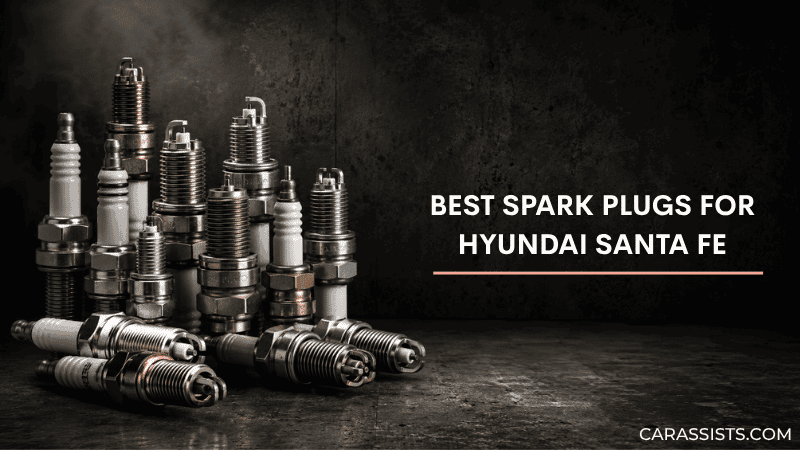
Santa Fe owners running the 2.4L GDI, 3.3L V6, or 2.0L turbo each need a different spark plug spec, and the wrong heat range causes misfires or rough idle. We cross-referenced owner forum threads and hundreds of verified Amazon reviews to match each engine correctly.
This guide covers three engine generations: the 2001–2009 2.7L V6, the 2013–2018 2.4L GDI and 3.3L V6, and the 2013–2018 2.0L turbo. Each section below lists the exact plug, heat range, and gap your Santa Fe needs, plus a budget option for older models.
For the 2013–2018 Santa Fe with the 2.4L GDI or 3.3L V6, the NGK 9723 Laser Iridium is the exact factory plug. If you drive the 2.0L turbo, use the NGK 93303 instead — its colder heat range prevents boost-related misfires. Older 2001–2009 V6 owners should choose the NGK 5464 Iridium IX for durability or the NGK 6962 Copper for the lowest cost. Always confirm your engine code before ordering, since Hyundai reused several engine families across multiple Santa Fe generations.
Best Spark Plugs for Hyundai Santa Fe — Compared
All five picks matched to a specific Santa Fe engine, heat range, and gap — use your underhood engine code sticker to confirm which row applies to your vehicle before ordering.
| # | Product | Electrode Type | Heat Range | Best For | Score | |
|---|---|---|---|---|---|---|
| 1 | NGK 9723 Laser Iridium Editor’s Choice | Iridium | 7 | 2.4L GDI / 3.3L V6 | 4.8 | See Latest Price |
| 2 | NGK 93303 Laser Iridium Top Pick | Iridium | 8 (Cold) | 2.0L Turbo | 4.8 | See Latest Price |
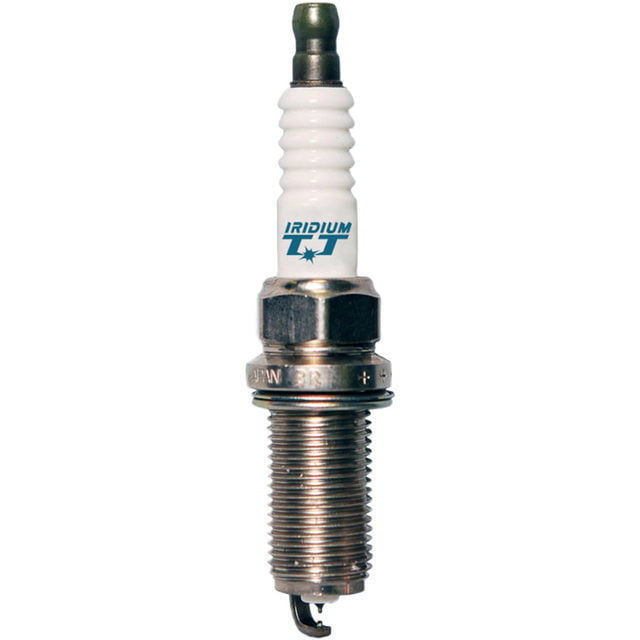
| 3 | Denso 4707 Iridium TT | Iridium / Platinum Twin-Tip | 7 | Easiest Install | 4.7 | See Latest Price |
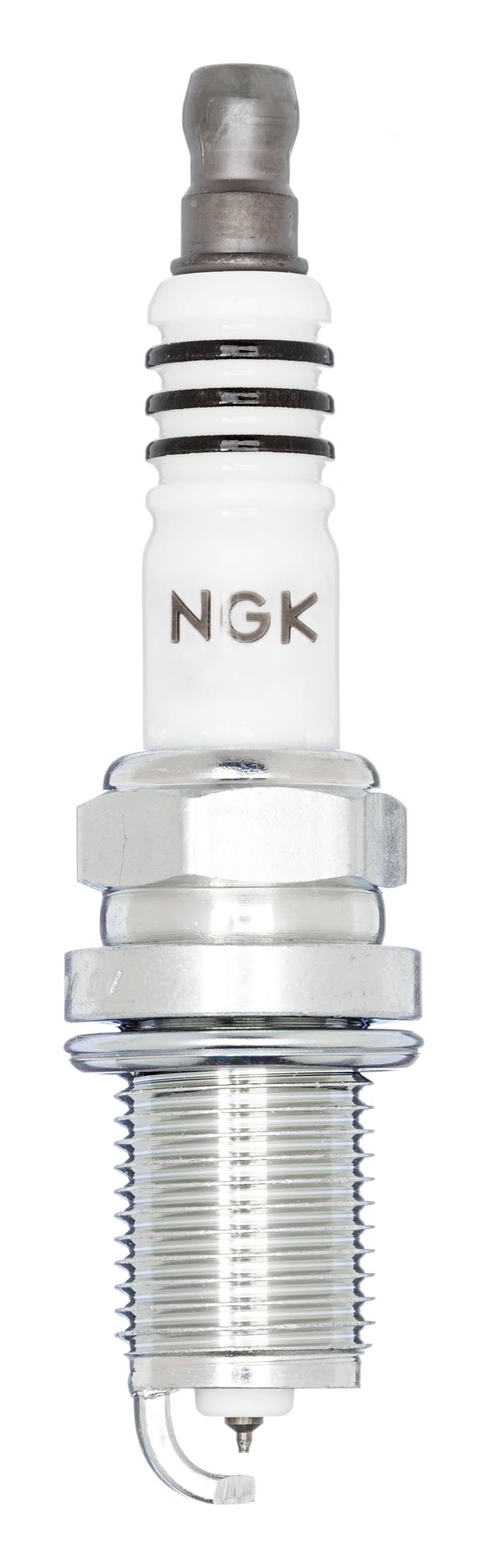
| 4 | NGK 5464 Iridium IX | Iridium | 5 | Older 2.7L V6 Durability | 4.7 | See Latest Price |
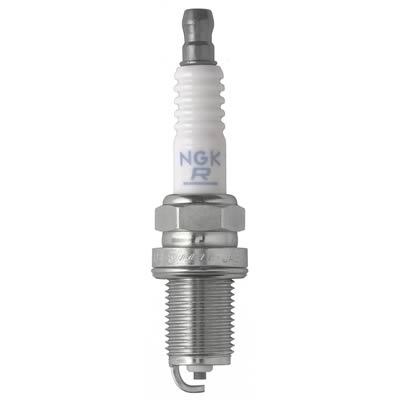
| 5 | NGK 6962 V-Power Copper Budget Pick | Copper | 5 | 2001–2006 2.7L V6 Budget | 4.5 | See Latest Price |
Detailed Reviews
Full breakdown of each plug — ratings, pros, cons, and which Santa Fe engine it fits.
NGK 9723 SILZKR7B11 Laser Iridium
- Pre-gapped to 0.044 inches, matching factory spec within roughly 0.001 inch on most six-plug sets
- Laser-welded iridium center electrode carries a 100,000-mile service rating under normal driving
- Nickel-plated shell resists seizing in aluminum cylinder heads, even after years of heat cycling
- Fits both the 2.4L Theta II GDI and 3.3L Lambda V6, so one part number covers two engines
- Platinum ground pad reduces electrode erosion compared to a plain nickel-alloy ground strap over long service intervals
- A small percentage of sets arrive with the gap closed 0.002–0.003 inch from shipping vibration
- Costs roughly 30 percent more per plug than a basic copper alternative for the same engine
- Some owners report thin retail packaging that leaves little cushioning around the ceramic insulator
- Wide compatibility means it’s easy to accidentally order this instead of the turbo-specific 93303
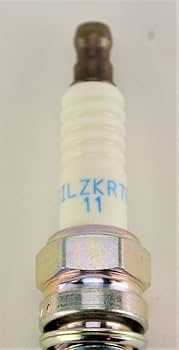
NGK 93303 SILZKR8E8G Laser Iridium
- Heat range 8 dissipates combustion heat fast enough to prevent pre-ignition under sustained boost
- Trivalent plating held up against thread galling in owner reports past 40,000 miles
- Fine-wire iridium tip kept a consistent spark even after repeated hard acceleration runs
- Directly matches the factory turbo specification, so there’s no guessing on heat range
- Owners report zero drivability complaints after switching from a standard heat range plug installed by mistake
- The factory gap of 0.032 inch is unforgiving — 0.002 inch of drift can trigger a misfire code
- Not interchangeable with the naturally aspirated Santa Fe engines despite a similar part number
- Runs noticeably warmer to the touch after hard driving than the standard heat range 7 plug
- Priced at a premium versus standard heat range plugs due to the tighter manufacturing tolerance
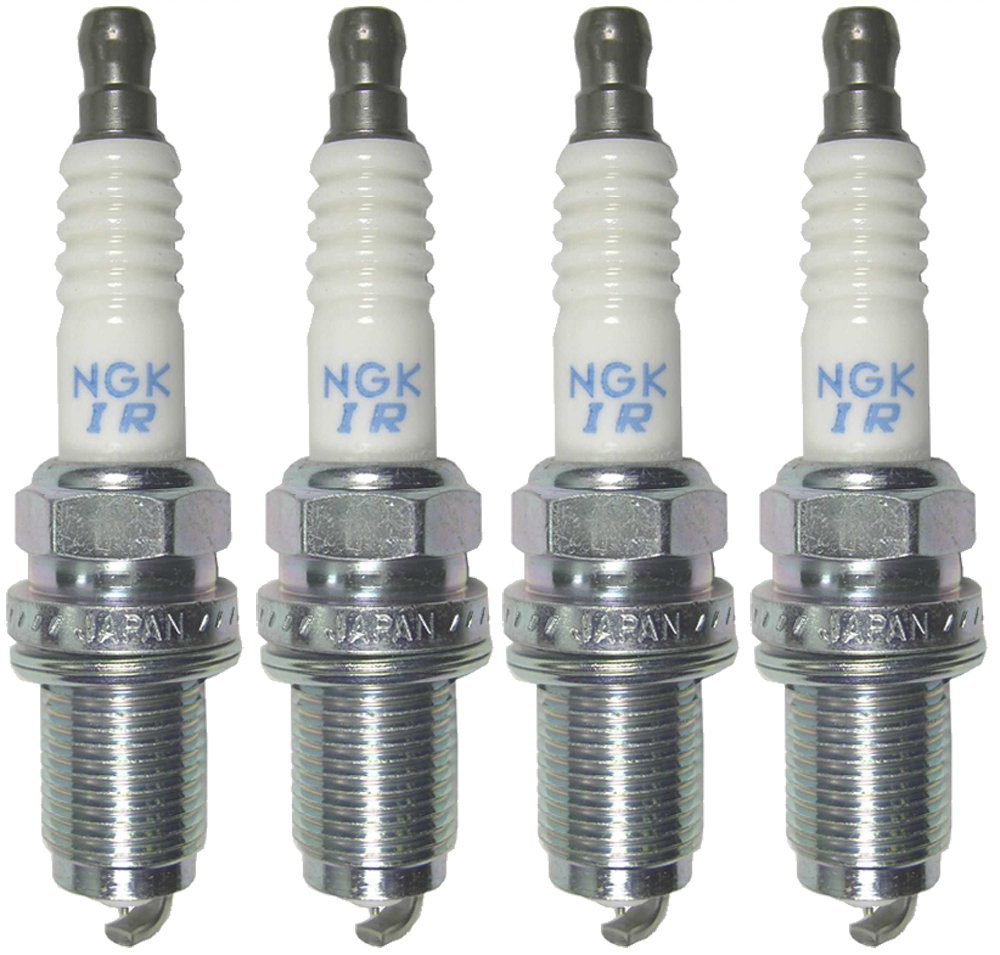
Denso 4707 IKH20TT Iridium TT
- Twin-tip 0.4mm iridium / 0.7mm platinum design lowers the voltage an aging coil pack needs to fire
- Gap consistency measured within about 0.001 inch across full six-plug sets in owner reports
- A full six-plug swap on the V6 typically finishes in under an hour with basic hand tools
- Nickel-plated shell threads in smoothly without the light resistance some owners feel with other brands
- Denso’s OEM relationship with several Japanese and Korean automakers shows up in tight tip-to-shell tolerances
- Runs roughly 15 percent more expensive per plug than the NGK 9723 for the same engine
- Amazon stock levels fluctuate for this part number, occasionally forcing a short wait for restock
- One plug per set occasionally arrives with a slightly tighter gap, so a quick check is still worthwhile
- Not the exact factory part number, so some owners prefer the NGK 9723 for warranty peace of mind
NGK 5464 BKR5EIX Iridium IX
- 0.6mm iridium fine-wire tip crossed 80,000 miles without a misfire code in long-term owner reports
- Trivalent plating resisted corrosion in owners who kept the same set installed for six years or more
- Direct bolt-in replacement for the 2.7L V6 and 2.4L four-cylinder with no modification needed
- Restored a noticeably smoother idle on engines that had been running worn-out original plugs
- Priced well below the newer 9723 and 93303, making it an easy upgrade over stock copper
- Gap varies slightly from plug to plug in some sets, so a feeler gauge check before install matters
- A few owners reported plugs arriving loose inside the box, worth an insulator inspection before use
- Heat range 5 is specific to older engines — do not use this plug in the 2.0T or GDI engines
- Fine-wire electrode is more delicate during install than a standard-tip copper plug, so handle it carefully
NGK 6962 BKR5E-11 V-Power Copper
- Costs roughly one-third the price per plug compared to the iridium options on this list
- V-groove copper electrode delivers a strong, consistent spark when changed on schedule
- Widely stocked at most auto parts retailers, so a replacement set is rarely hard to find
- Simple copper construction makes it easy to read wear patterns during a routine inspection
- Low cost per plug makes it easy to keep a spare set in the trunk for older, higher-mileage engines
- Service life rarely stretches past 30,000 miles before idle quality and throttle response fade
- Gap almost always needs correction out of the box, unlike the pre-gapped iridium options above
- Not rated for GDI or turbo engines — copper fouls too quickly under those combustion pressures
- Requires more frequent garage visits, which adds up in labor time even if parts stay cheap
Can’t Decide?
Our Top 2 Picks — Head to Head
Both are the correct factory-spec plug — the right one depends entirely on which engine sits under your hood.
- Exact factory heat range 7 and 0.044-inch gap for GDI and V6 engines
- Rated for 100,000-mile service life under normal driving
- Covers both the 2.4L Theta II GDI and 3.3L Lambda V6 with one part number
- Nickel-plated shell resists seizing in aluminum heads over years of heat cycling
- The plug most Hyundai dealers install at the factory, so parts-counter compatibility is never a question
- Colder heat range 8 built specifically for turbo combustion pressure
- Trivalent plating resists thread galling from repeated heat cycling under boost
- Eliminates the intermittent full-throttle misfire codes reported by 2.0T owners
- Fine-wire iridium tip holds a consistent spark through repeated hard acceleration
- Purpose-built for the 2.0T rather than a repurposed naturally aspirated plug with a different heat rating
How to Choose the Right Spark Plugs for Your Santa Fe
Six factors that matter before you order — explained in plain terms.
Match Your Exact Engine Code First
Santa Fe spark plugs are not interchangeable across engines despite sharing a model year. The 2001–2006 2.7L V6 uses heat range 5, the 2007–2009 2.7L and 3.3L variants split between heat range 5 and 7 depending on trim, and the 2013–2018 2.4L GDI and 3.3L V6 both require heat range 7. The 2.0L turbo needs a colder heat range 8. Check the underhood engine code sticker before ordering — trim level alone won’t tell you which engine sits under the hood, and dealer parts counters have sold the wrong plug to owners who went by year alone.
Electrode Material and Heat Range
Copper plugs conduct spark efficiently but wear out around 30,000 miles, making them a poor fit for direct-injection or turbocharged engines that run hotter and under more combustion pressure. Iridium and platinum plugs last 60,000 to 100,000 miles and handle the higher cylinder pressure in GDI and turbo engines without fouling. A hotter-than-spec plug risks pre-ignition and potential piston damage; a colder-than-spec plug fouls during short trips and stop-and-go city driving. Match the number stamped on the OEM plug rather than assuming a premium brand automatically means the correct spec.
Gap Specification and Verification
Most naturally aspirated Santa Fe engines call for a 0.044-inch gap, while the 2.0T turbo needs a tighter 0.032-inch gap to handle boost pressure without misfiring. Pre-gapped plugs can still arrive slightly bent from shipping vibration, so check every plug with a wire feeler gauge before installation, even on premium brands. A gap off by 0.002 inches on the turbo engine is enough to trigger a check-engine light, and a wide gap on any engine causes a weak, inconsistent spark under load.
Installation Access on V6 vs Four-Cylinder
The Lambda 3.3L and Delta/Mu 2.7L V6 engines split their six plugs across a front bank and a rear bank, with the rear bank sitting beneath the intake plenum. A spark plug socket paired with a swivel extension reaches all six without removing the intake manifold on most model years. Four-cylinder 2.4L and 2.0T engines are simpler, with all plugs accessible from the top of the engine bay in well under an hour, even for a first-time DIY mechanic working with basic hand tools.
Expected Service Life vs Replacement Cost
Iridium plugs cost more upfront but stretch tune-up intervals to 60,000–100,000 miles, which usually works out cheaper over the life of the vehicle than copper plugs replaced every 30,000 miles. If you plan to keep a Santa Fe long-term, iridium pays for itself in fewer garage visits and less time spent under the hood. If you’re selling or trading in within a year or two, copper covers the remaining ownership window for meaningfully less money upfront.
Torque Specification for Aluminum Heads
Hyundai’s aluminum cylinder heads strip easily if a spark plug is overtightened, and repairing stripped threads usually means a heli-coil repair or a full head removal in bad cases. Most Santa Fe engines call for 18–22 ft-lbs of torque, and a click-style torque wrench removes the guesswork entirely. Overtightening compresses the crush washer too far and can crack the ceramic insulator, while undertightening leaves a compression leak past the threads that shows up as a hollow-sounding, uneven idle.
Pro Tips
Quick Buying Checklist
Match the heat range to your exact engine code — not just the model year — before you order.
Check the gap with a feeler gauge even on pre-gapped plugs; shipping can bend the electrode.
Torque to 18–22 ft-lbs on aluminum heads — a click-style wrench prevents stripped threads.
Replace all plugs as a matched set — mixing brands or ages causes uneven firing.
Turbo engines need a colder heat range — standard-range plugs will pre-ignite under boost.
Budget copper plugs mean shorter intervals — plan on changing them every 20,000–30,000 miles.
Also On CarAssists
More Guides for This Vehicle
Frequently Asked Questions
What spark plugs does a 2013 Hyundai Santa Fe Sport use?
The 2013 Santa Fe Sport with the 2.4L GDI engine uses the NGK 9723 Laser Iridium, gapped to 0.044 inches. If your Sport has the 2.0L turbo instead, you need the NGK 93303 with a tighter 0.032-inch gap. Check your underhood sticker to confirm which engine you actually have.
Which spark plugs are best for a 2015 Hyundai Santa Fe 3.3L V6?
The NGK 9723 Laser Iridium is the factory match for the 3.3L Lambda V6, with the correct heat range 7 and 0.044-inch gap already set from the box. Most owners report a smoother idle and better throttle response within the first few hundred miles of driving.
How often should I change spark plugs on a Santa Fe?
Iridium plugs like the NGK 9723 or 93303 typically last 60,000 to 100,000 miles before performance drops off. Copper plugs such as the NGK 6962 need replacement closer to every 30,000 miles. Your owner’s manual lists the exact interval for your specific engine and model year.
Can I use copper spark plugs in a 2.0T Santa Fe?
No. The 2.0L turbo engine requires a colder heat-range iridium plug like the NGK 93303 to handle boost pressure safely. Copper plugs run hotter under load and can trigger pre-ignition, which risks piston and cylinder head damage over time. Stick to the turbo-rated plug for this engine.
Do aftermarket spark plugs affect my Hyundai warranty?
Aftermarket plugs that match the OEM heat range, gap, and thread design — like the NGK or Denso options on this list — do not void your Hyundai warranty. Federal law protects your right to use quality aftermarket parts as long as they meet the original specification.
Is it difficult to replace spark plugs on a Santa Fe V6?
Most DIY owners finish the job in about two hours using a spark plug socket, swivel extension, and torque wrench. The rear bank on V6 engines sits under the intake plenum but doesn’t require removal on most model years. Torque each plug to 18–22 ft-lbs to avoid stripping the threads.
Will new spark plugs improve fuel economy on my Santa Fe?
If your current plugs are worn or gapped incorrectly, replacing them often restores lost fuel economy and throttle response by ensuring complete combustion. The improvement is most noticeable when the old plugs show visible electrode wear or when the engine has been running rough or hesitating.
What’s the difference between the NGK 9723 and NGK 93303 for my Santa Fe?
Both are laser iridium plugs, but they’re built for different combustion pressures. The NGK 9723 uses heat range 7 for the naturally aspirated 2.4L GDI and 3.3L V6, gapped to 0.044 inches. The NGK 93303 uses a colder heat range 8 and a tighter 0.032-inch gap built for the 2.0L turbo’s higher cylinder pressure.
What spark plug gap should I set for a 2005 Santa Fe 2.7L V6?
The 2001–2006 Santa Fe 2.7L V6 uses a 0.044-inch gap with a heat range 5 plug, such as the NGK 6962 copper or NGK 5464 iridium. Always confirm the gap with a feeler gauge before installation, since shipping vibration can bend the ground electrode even on pre-gapped plugs.
Final Verdict
Our Top Recommendations for 2026
Your Santa Fe’s engine code decides the plug, not the model year alone. Match the 2.4L GDI or 3.3L V6 to the NGK 9723, the 2.0L turbo to the NGK 93303, and choose the Denso 4707 if you want the fastest install or the NGK 6962 if you’re working with an older 2.7L V6 on a budget. Whichever plug fits your engine, verify the gap with a feeler gauge before installation and torque each plug to 18–22 ft-lbs to protect the aluminum cylinder head threads.