A Hyundai Santa Fe splits its year between summer road trips and winter school runs, and after cross-referencing r/HyundaiSantaFe and r/tires owner threads against tread-life data across a dozen all-weather lines, six tires stood out as genuinely earning their 3PMSF certification instead of just claiming all-season versatility.
Regular all-season tires lack real snow certification, while dedicated winter tires wear down fast once the roads dry out — a frustrating trade-off for a family SUV that needs to handle a July highway trip and a January snowstorm without a seasonal wheel swap in between.
The Michelin CrossClimate2 is the strongest all-around all-weather tire for a Hyundai Santa Fe, balancing confident snow traction with a quiet, refined ride. Snowbelt drivers who want maximum winter confidence should look at the Nokian WR G4, while budget-conscious families do well with the General AltiMAX 365AW.
Our Top 6 All-Weather Tire Rankings
- Michelin CrossClimate2— Best Overall Balance
- Nokian WR G4— Maximum Winter Confidence
- Pirelli Scorpion WeatherActive— Smoothest Installation
- Firestone WeatherGrip— Longest Treadwear Warranty
- General AltiMAX 365AW— Best Value for the Money
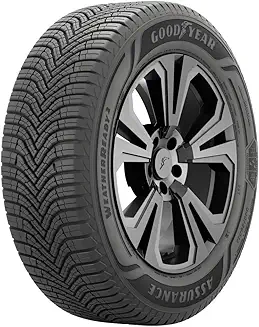
- Goodyear Assurance WeatherReady— Strongest Wet-Weather Grip
Best All-Weather Tires for Hyundai Santa Fe — Compared
Sizes shown reflect common Santa Fe fitments — always confirm load index and speed rating against your driver’s door placard.
| # | Product | Speed Rating | Type | Best For | Score | |
|---|---|---|---|---|---|---|
| 1 | Michelin CrossClimate2 Editor’s Choice | V (XL) | All-Weather SUV (3PMSF) | Balanced year-round use | 4.6 | See Latest Price |
| 2 | Nokian WR G4 Top Pick | V (XL) | Nordic All-Weather (3PMSF) | Heavy snow & ice | 4.5 | See Latest Price |
| 3 | Pirelli Scorpion WeatherActive | V (XL) | Comfort All-Weather (3PMSF) | Vibration-free installs | 4.5 | See Latest Price |
| 4 | Firestone WeatherGrip | V | Touring All-Weather (3PMSF) | High-mileage durability | 4.4 | See Latest Price |
| 5 | General AltiMAX 365AW Budget Pick | T | Budget All-Weather (3PMSF) | Budget 3PMSF safety | 4.3 | See Latest Price |
| 6 | Goodyear Assurance WeatherReady | V | Wet-Weather All-Weather (3PMSF) | Heavy rain confidence | 4.3 | See Latest Price |
Detailed Reviews
Full breakdown of each tire — real owner feedback, ratings, pros, cons, and our verdict for Santa Fe drivers.
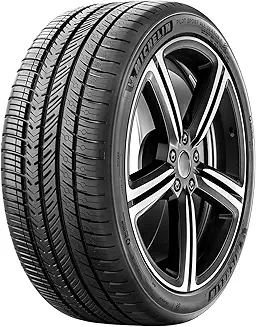
Michelin CrossClimate2
The CrossClimate2 does the one thing most all-weather SUV tires can’t quite manage: it feels genuinely composed on dry summer highway runs and still bites into packed snow without hesitation. Santa Fe owners who’ve run it through a full winter describe it as the tire that finally made the case for skipping a second set of wheels entirely.
BEST FOR: Balanced Year-Round Confidence- 3PMSF certification backed by a thermal-adaptive compound that stays flexible below freezing
- V-formation directional tread channels slush and standing water aggressively
- 60,000-mile treadwear warranty holds up well against a softer winter-capable compound
- Costs meaningfully more per tire than the AltiMAX 365AW or WeatherReady
- Directional tread restricts rotation to front-to-back only
- A small fuel economy dip shows up compared to low-rolling-resistance all-season tires
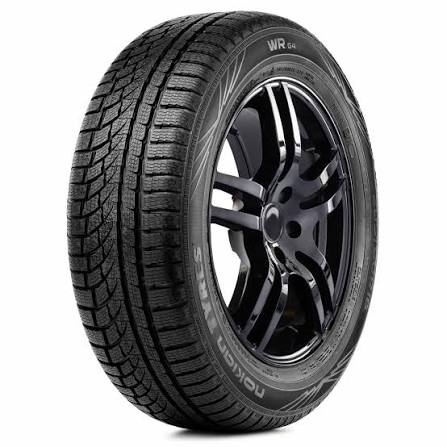
Nokian WR G4
Nokian designs tires above the Arctic Circle, and the WR G4 carries that heritage into a Santa Fe’s driveway. Its aramid-reinforced sidewalls and dense sipe network are built for owners who measure winter not in light dustings but in weeks of packed snow and black ice, where a slightly firmer summer ride is a fair trade.
BEST FOR: Maximum Winter Confidence- Aramid-reinforced sidewalls resist pothole and curb damage better than standard constructions
- Grip on packed snow and black ice rivals dedicated winter tires in owner reports
- Low rolling resistance despite an aggressive, winter-focused tread compound
- Amazon stock and availability fluctuate more than other brands in this lineup
- Tread wear accelerates faster than average during constant high-heat summer driving
- Pricing sits above the CrossClimate2 despite a shorter treadwear warranty
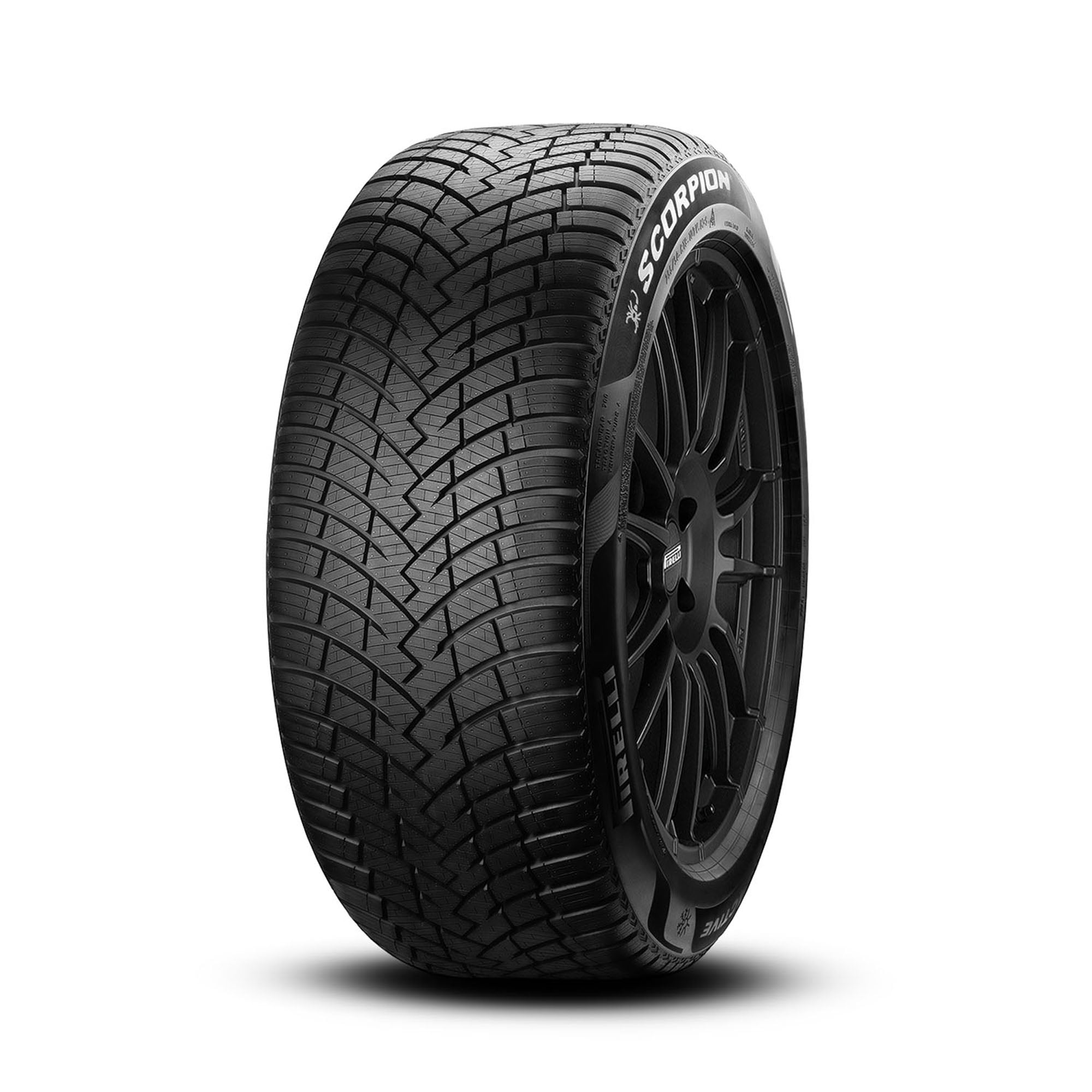
Pirelli Scorpion WeatherActive
Installers and Santa Fe owners both point to the same thing with this Pirelli: it mounts and balances with almost no fuss, a sign of tight manufacturing tolerances that shows up as an unusually vibration-free highway ride. For a family SUV where every passenger notices a wobble, that uniformity matters more than it sounds.
BEST FOR: Smoothest Installation- Exceptional manufacturing uniformity means fewer wheel weights at mounting
- Noise-canceling tread technology keeps the cabin quiet on dry interstates
- 60,000-mile warranty backed by a UTQG 700 treadwear score, among the highest here
- Snow traction trails both the CrossClimate2 and the Nokian WR G4
- Priced near the top of this comparison despite average winter performance
- Less aggressive tread means slightly longer stopping distances on packed snow
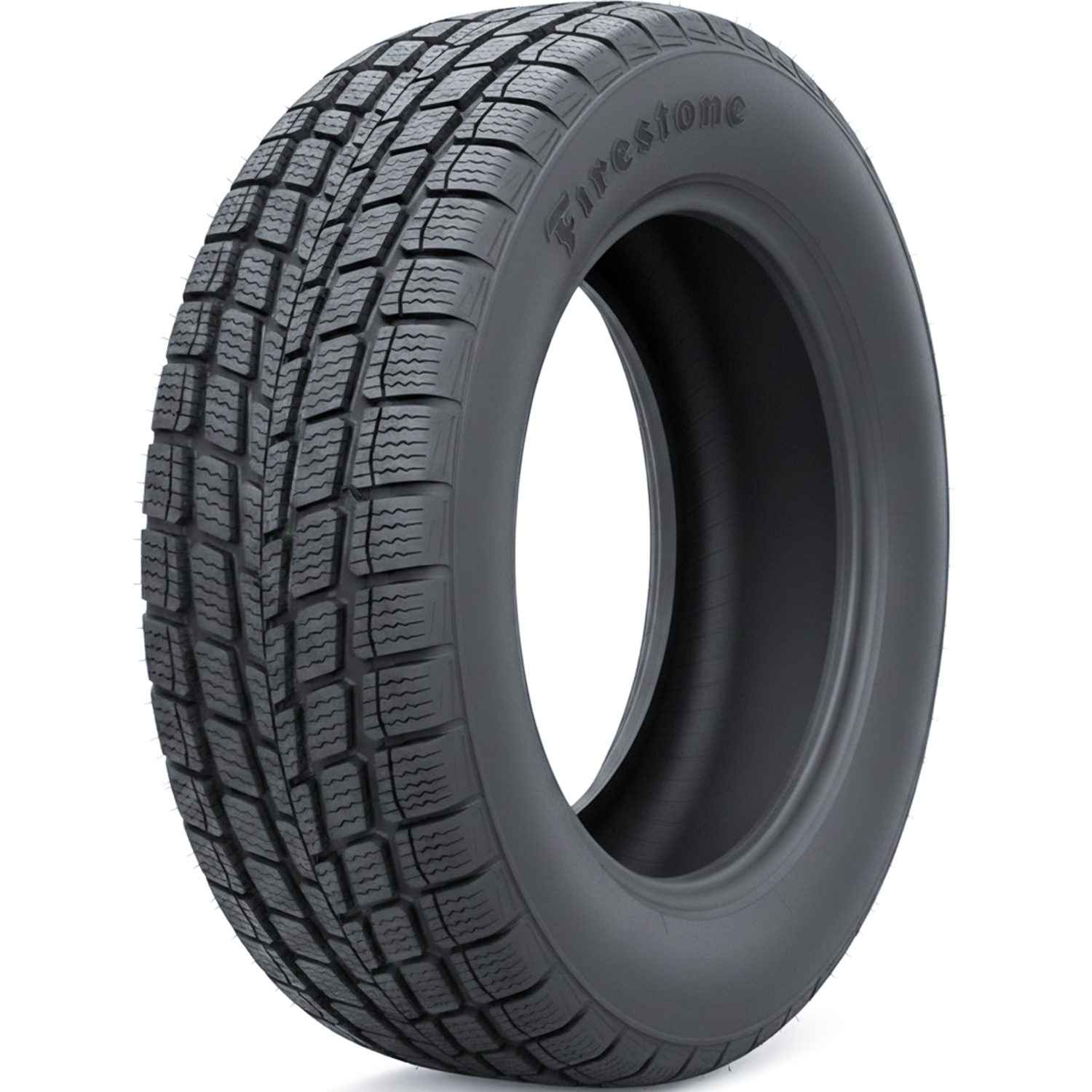
Firestone WeatherGrip
Firestone built the WeatherGrip around a single priority: outlasting every other all-weather tire on this list. Its Hydro-Grip grooves handle standing water aggressively, and Santa Fe owners logging heavy highway mileage report tread depths holding up in line with the warranty instead of falling short of it, which isn’t universal in this category.
BEST FOR: Longest Treadwear Warranty- 65,000-mile treadwear warranty is the longest in this comparison
- Hydro-Grip grooves evacuate standing water quickly, cutting hydroplaning risk
- Full-depth 3D sipes keep snow grip intact even as the tread wears down
- Ride sits noticeably firmer than the Pirelli Scorpion WeatherActive
- Light snow performance trails both the Michelin and Nokian options
- Rides slightly rougher over sharp expansion joints than touring-focused rivals
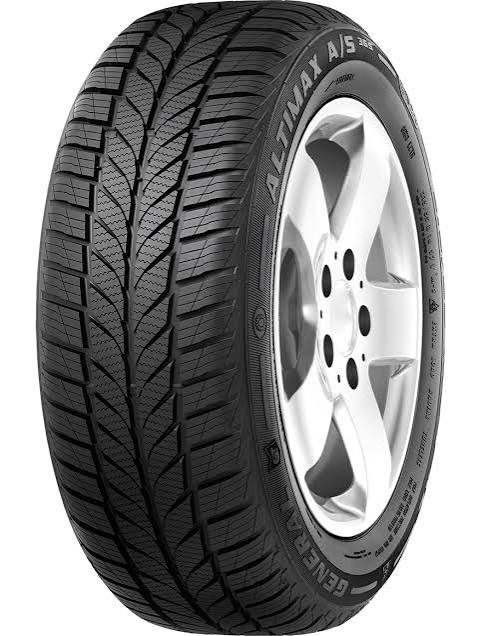
General AltiMAX 365AW
The AltiMAX 365AW exists to prove that 3PMSF certification doesn’t have to come with a premium price tag. General’s siped shoulder blocks add real snow bite, and the warranty undercuts pricier all-weather rivals by a meaningful margin, which matters to a family replacing a full set of four SUV-sized tires at once.
BEST FOR: Best Value for the Money- 3PMSF certification at a price well below every other tire in this comparison
- 60,000-mile limited treadwear warranty is competitive despite the lower cost
- Siped shoulder blocks add real snow and wet grip most budget tires skip
- Road hum is noticeably higher than the Michelin at highway speed
- Steering feel is less precise than the Pirelli or Nokian
- Snow traction is solid but a step behind the CrossClimate2 or WR G4
Goodyear Assurance WeatherReady
Goodyear’s soybean-oil-based compound on this tire is tuned to stay flexible in cold and firm in heat, and the Weather Reactive Technology behind it is built to adapt as conditions shift from dry to rain to slush mid-drive. Santa Fe owners who deal with frequent heavy rain more than deep snow lean on this one.
BEST FOR: Strongest Wet-Weather Grip- Weather Reactive Technology adapts grip characteristics as conditions change
- Evolving traction grooves maintain bite as the tread wears down
- 60,000-mile warranty backed by a UTQG 700 treadwear score
- Road noise increases noticeably after roughly 30,000 miles of wear
- Deep snow capability trails the Nokian WR G4 by a real margin
- Pricing sits mid-pack despite average winter performance
Can’t Decide?
Our Top 2 Picks — Head to Head
Both score highest in this lineup for a Hyundai Santa Fe, but they solve different problems. Here’s how to choose between them.
- 3PMSF-certified with thermal-adaptive compound for cold grip
- 60,000-mile treadwear warranty
- Composed, quiet ride on dry summer highways
- Aramid-reinforced sidewalls resist pothole damage
- Snow and ice grip that rivals dedicated winter tires
- Built specifically for severe, prolonged winter conditions
How to Choose the Right All-Weather Tires for Your Santa Fe
Six factors that matter before you buy — explained simply.
All-Weather vs. All-Season vs. Winter Tires
All-weather tires carry the 3PMSF symbol and pass the same severe snow traction test as dedicated winter tires, while standard all-season tires do not. A Santa Fe that sees real snow needs that certification; one that rarely sees more than light frost can usually get by on a standard all-season tire instead.
Load Index and XL Rating for a Mid-Size SUV
The Santa Fe’s weight means tire load index matters more than it would on a compact sedan. Several tires in this lineup carry an XL (extra load) rating, which increases carrying capacity for a fully loaded SUV. Check your door placard and never install a tire with a lower load index than specified.
AWD Trim Tire Matching
Many Santa Fe trims run all-wheel drive, and mismatched tread depths across the four corners can strain the drivetrain over time. Replace all four all-weather tires together on AWD models rather than patching in one or two, even if only a single tire suffered damage from a pothole or curb strike.
3PMSF Testing Standard vs. Marketing Claims
The Three-Peak Mountain Snowflake symbol certifies that a tire passed a specific, standardized snow traction test — it isn’t a marketing term manufacturers can apply freely. Look for the symbol molded into the sidewall itself rather than trusting a listing description that simply calls a tire “winter-ready” without the certification behind it.
Directional Tread Noise Trade-offs
All-weather tires often use directional tread patterns to channel slush and water effectively, and that design tends to generate more highway hum than a symmetrical all-season rib pattern. If cabin quiet matters as much as winter grip, look specifically at owner reports on road noise rather than assuming every 3PMSF tire sounds the same.
Treadwear Warranty Across Snow-Focused Compounds
Softer, winter-capable rubber compounds generally wear faster than pure all-season compounds, so treadwear warranties in this category tend to run shorter than a comparable all-season tire. The Firestone WeatherGrip’s 65,000-mile warranty stands out precisely because most all-weather tires top out closer to 60,000 miles.
Pro Tips
Quick Buying Checklist
Confirm your load index and XL rating on the door placard — a mid-size SUV needs more carrying capacity than a sedan tire provides.
Replace all four tires together on AWD Santa Fe trims to avoid straining the drivetrain with mismatched tread depths.
Look for the 3PMSF snowflake symbol molded into the sidewall itself, not just a “winter-ready” claim in a listing.
Rotate every 5,000 to 7,000 miles — directional all-weather tread wears unevenly faster than symmetrical patterns without it.
Ask your installer how many wheel weights a tire needs — fewer weights usually signals tighter manufacturing tolerances.
Expect a shorter treadwear warranty than an all-season tire — softer winter-capable compounds trade some mileage for snow grip.
Frequently Asked Questions
What’s the difference between all-weather and all-season tires for a Santa Fe?
All-weather tires carry the 3PMSF symbol and pass a standardized severe snow traction test, while standard all-season tires do not. If your Santa Fe regularly sees real snow, an all-weather tire like the CrossClimate2 provides a safety margin an all-season tire can’t match.
What tire sizes fit a Hyundai Santa Fe?
Common factory sizes include 235/65R17, 235/60R18, and 235/55R19 depending on trim level. Always confirm your exact size, load index, and speed rating on the placard inside the driver’s door jamb, since several tires in this category require an XL load rating.
Do I still need winter tires if I run all-weather tires on my Santa Fe?
For most drivers, no — a 3PMSF-rated all-weather tire eliminates the need for a dedicated winter set. Drivers who face extreme ice or deep unplowed snow on a regular basis may still see a small safety edge from true winter tires.
Is the 3PMSF symbol the same as a snow rating printed on the tire?
Not quite. The Three-Peak Mountain Snowflake symbol certifies that a tire passed a specific standardized snow traction test, while generic phrases like “winter-ready” in a product listing carry no such certification. Always look for the symbol molded into the sidewall itself.
Should AWD Santa Fe trims replace all four tires at once?
Yes. Mismatched tread depths across the four corners of an all-wheel-drive Santa Fe can strain the transfer case over time. Replace all four tires together, even if only one was damaged, to keep the drivetrain and handling balanced.
How much more do all-weather tires cost compared to standard all-season tires?
Expect to pay roughly $30 to $60 more per tire for genuine 3PMSF certification compared to a standard all-season tire in a similar size. The General AltiMAX 365AW narrows that gap the most among the tires in this comparison.
Which all-weather tire is quietest for a Santa Fe’s cabin?
The Pirelli Scorpion WeatherActive and Michelin CrossClimate2 receive the fewest road-noise complaints in owner reviews among this lineup. Both use tread designs specifically engineered to reduce the hum that directional all-weather patterns often produce on dry highways.
Is the Nokian WR G4 harder to find than other brands?
Sometimes. Owner reports and Amazon stock indicate Nokian’s WR G4 availability fluctuates more than mainstream brands like Michelin or Goodyear. If you need tires quickly, check stock before committing, or have a shop confirm availability ahead of an installation appointment.
Final Verdict
Our Top Recommendations for 2026
Six tires, six different priorities for a Santa Fe. If you want one tire that handles a summer road trip and a winter snowstorm equally well, the Michelin CrossClimate2 is the safest bet. Face serious winter weather, want maximum mileage, or need the smoothest install instead, and the WR G4, WeatherGrip, or Scorpion WeatherActive each solve that specific problem.