The BMW R1200GS’s 500-plus pounds meet loose gravel, sand, and washed-out switchbacks as often as open highway, and generic dual-sport rubber buckles fast under that load. After cross-referencing owner reports from Amazon, ADVRider, and BMW MOA forums against five leading off-road tires, five choices stood out for consistent real-world grip and mileage.
Your ideal choice depends on how you ride, not how you picture riding. Confirmed 50/50 explorers want the TKC 80’s raw dirt bite; pavement-heavy owners get quieter miles from an 80/20 option like the Scorpion Rally STR.
The Continental TKC 80 remains the top all-around pick for riders who split time evenly between dirt and pavement. Choose the Michelin Anakee Wild for wet, rocky trails, the Shinko 804/805 for a tight budget, and the Heidenau K60 Scout if you never want to think about tire wear again.
Best Off-Road Tires for BMW R1200GS — Compared
Five off-road tires built for the R1200GS’s 120/70-19 front and 170/60-17 rear fitment, ranked by real-world performance.
| # | Product | Speed Rating | Type | Best For | Score | |
|---|---|---|---|---|---|---|
| 1 | Continental TKC 80 Editor’s Choice | Q (100 mph) | 50/50 Knobby | Balanced dirt & pavement | 4.5 | See Latest Price |
| 2 | Michelin Anakee Wild Top Pick | R (106 mph) | 50/50 Silica Knobby | Wet mud & rocky trails | 4.6 | See Latest Price |
| 3 | Shinko 804/805 Big Block Budget Pick | H (130 mph) | 50/50 Budget Knobby | Aggressive off-road on a budget | 4.4 | See Latest Price |
| 4 | Heidenau K60 Scout | S (112 mph) | 60/40 Long-Haul | Extreme tread life | 4.3 | See Latest Price |
| 5 | Pirelli Scorpion Rally STR | V (149 mph) | 80/20 Street-Biased | Easy home mounting & comfort | 4.5 | See Latest Price |
Detailed Reviews
Full breakdown of each tire — ratings, pros, cons, and who each one actually fits.
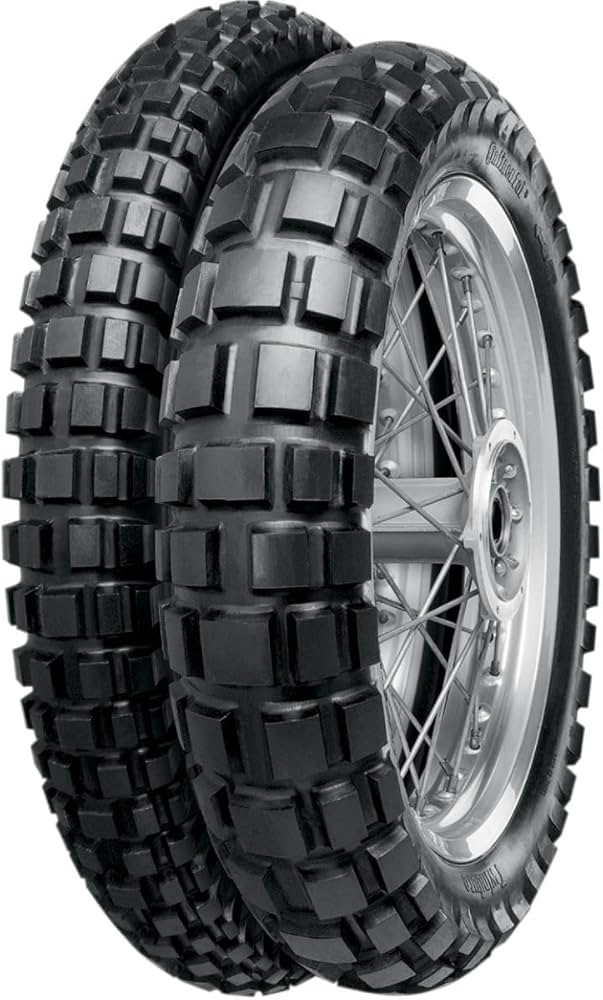
Continental TKC 80
- Open block tread claws through mud and loose rock without constant wheelspin
- Stays composed on wet pavement despite the aggressive knob pattern
- Mounts easier than stiffer competitors like the Heidenau K60
- Holds traction at low pressures for sand and rock crawling
- Tread hums loudly above 55 mph on a fresh set
- Rear wears out in 3,000–5,000 miles under aggressive use
- Feels vague at max lean angle on dry tarmac
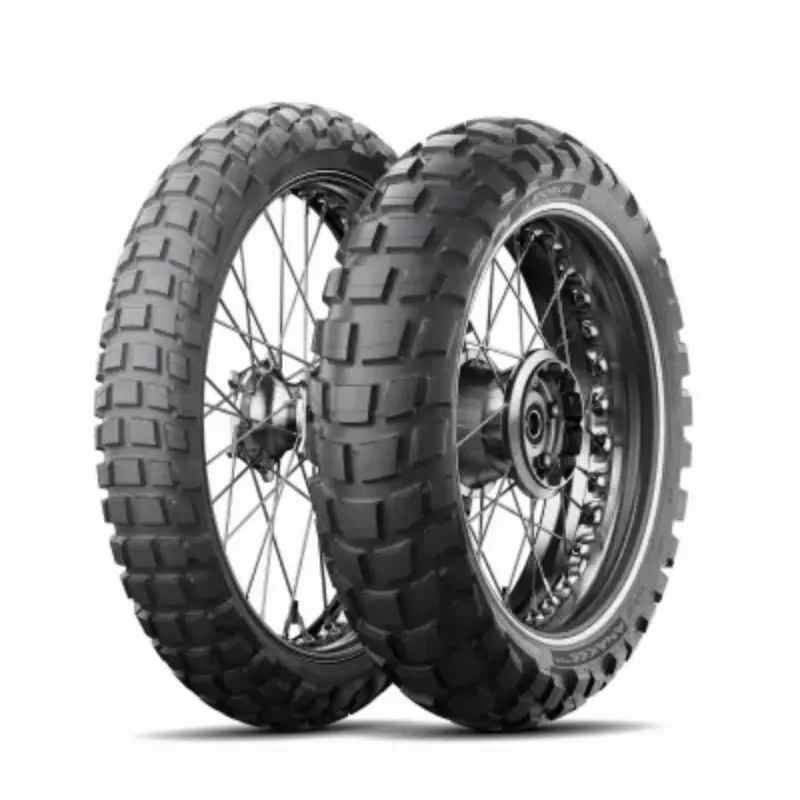
Michelin Anakee Wild
- Silica-rich compound bites hard on wet rock and damp clay
- Radial carcass feels stable past 80 mph on dry highway
- Wide block spacing ejects thick mud fast
- Predictable breakaway right at the cornering limit
- Costs well over $400 for a full set
- Rear tread wears in roughly 4,000–5,000 miles
- Some riders report light wander on rain-grooved freeways
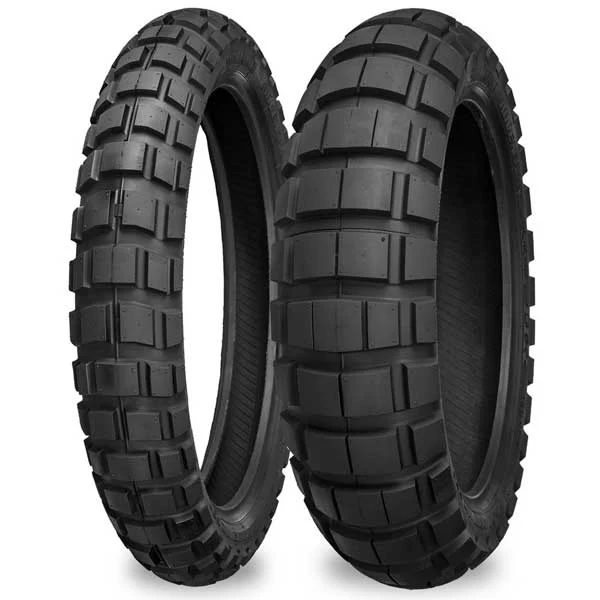
Shinko 804/805 Big Block
- Deep, widely spaced blocks handle mud and loose rock well
- Costs roughly half of comparable European knobbies
- Front tire steers with precision through loose gravel corners
- Reinforced carcass resists punctures on sharp rocks
- Rear wears under 3,000 miles when ridden hard on pavement
- Needs more balancing weight than premium alternatives
- Louder than average on the highway
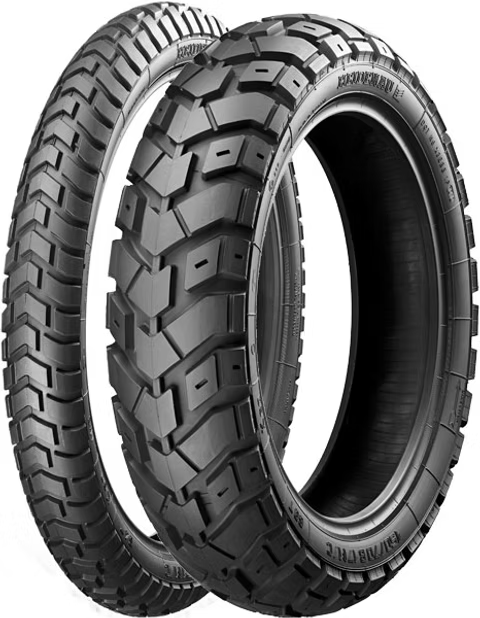
Heidenau K60 Scout
- Rear tire routinely exceeds 10,000 miles under mixed use
- Center rib on the rear cuts rolling resistance on sealed roads
- Stiff carcass shrugs off sharp rock impacts that cut softer tires
- High load rating suits a fully loaded, two-up GS
- Extremely stiff bead makes home mounting a genuine workout
- Grip is greasy on wet asphalt for the first 100 miles
- Adds noticeable weight versus every other tire on this list
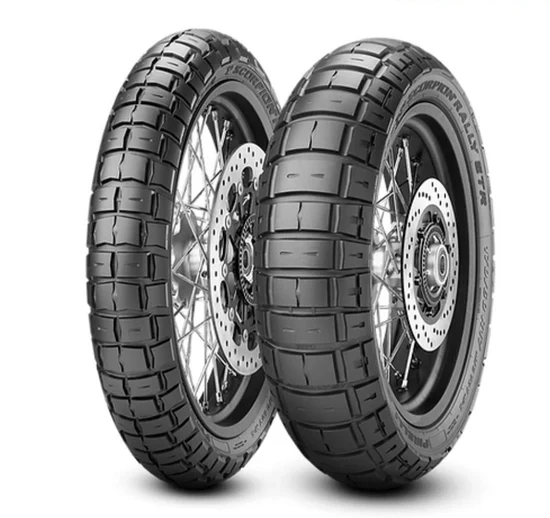
Pirelli Scorpion Rally STR
- Softer carcass seats on basic tire spoons without a fight
- Quiet, comfortable ride with very little tread noise
- Wide effective pressure range for street and gravel
- Silica compound helps even wear across the tread life
- Loses bite fast in deep mud or loose sand
- Rear wears in 5,000–7,000 miles, less than pricier touring tires
- Costs slightly more than comparable 80/20 alternatives
Can’t Decide?
Our Top 2 Picks — Head to Head
Both are excellent. Here’s how to choose between them.
- Costs roughly $100 less per tire than the Anakee Wild
- Digs deeper into loose rock and sand
- Easier bead seating for home installs
- Superior grip on wet rock and rain-soaked clay
- Feels more planted at sustained highway speeds
- Radial casing built for longer wear than a bias-ply knobby
How to Choose the Right Off-Road Tire
Six factors that matter before you buy — explained simply.
Match the Tread to Your Real Riding Ratio
A 50/50 tire like the TKC 80 only makes sense if you genuinely split time between dirt and pavement in something close to equal measure. Most GS owners overestimate their off-road mileage. If 80% of your riding stays on asphalt, an 80/20 tire like the Scorpion Rally STR delivers better mileage, less noise, and nearly as much gravel-road confidence.
Check the Load and Speed Rating
A fully loaded R1200GS with hard cases, camping gear, and a passenger puts far more stress on the rear tire than the bike weighs alone. Every tire on this list carries a load index and speed rating stamped on the sidewall — confirm it meets or exceeds BMW’s specification for your fully loaded weight, not just curb weight.
Decide Who Will Mount the Tire
Stiff-carcass tires like the Heidenau K60 Scout frustrate even experienced home mechanics and often require heat, sturdy spoons, and real patience. If you plan to swap tires in your own garage, a softer-carcass option like the Scorpion Rally STR seats far more easily. Otherwise, budget for shop labor and mounting fees.
Expect Tubeless-Rated Tires to Run With Tubes
The stock spoked wheels on nearly every R1200GS require inner tubes to hold air, even though every tire in this guide is technically tubeless-rated. Unless you’ve performed a tubeless rim-strip conversion, always install a fresh, heavy-duty motorcycle tube alongside a new tire. Reusing an old tube is a common cause of a slow leak on the trail.
Read Real-World Wear Reports, Not Marketing Mileage
Manufacturer mileage estimates rarely hold up once a tire meets a fully loaded GS on rocky, rutted terrain. Look instead at owner reports from forums like ADVRider or BMW MOA describing wear under similar loads and riding styles. A tire lasting only 3,000 miles through Baja may still be a smart buy once you set realistic expectations.
Factor in Balancing Effort
Some aggressive knobby tires need noticeably more wheel weight to balance correctly, which can hint at less consistent rubber distribution during manufacturing. Tires that balance with only a small amount of weight tend to deliver a smoother ride at highway speed and less vibration through the pegs on long, multi-hour stretches of interstate.
Pro Tips
Quick Buying Checklist
Match your tread to your real riding mix — an 80/20 tire saves money and your ears if dirt is only an occasional weekend thing.
Always install a fresh inner tube with every new tire; a worn tube can fail without warning under heat.
Give new rubber 100–200 miles of gentle break-in before pushing hard through corners.
Drop to 25–28 psi rear, 22–25 psi front off-road for a real jump in traction.
Budget for a shop mount on stiff tires like the Heidenau K60 — weak tools can pinch tubes or bend rims.
Frequently Asked Questions
What are the best off-road tires for a BMW R1200GS?
The right tire depends on your dirt-to-street mix. The Continental TKC 80 gives the most balanced off-road performance for genuine 50/50 riders. High-mileage riders should look at the Heidenau K60 Scout, while the Michelin Anakee Wild handles wet mud and rocky trails best of the group.
Do I need inner tubes with off-road tires on a GS?
Yes. The stock spoked wheels on a BMW R1200GS need inner tubes to hold air, even with tubeless-rated tires, unless you’ve converted the rims. Always install a fresh, heavy-duty tube with every tire change — a worn tube is a common cause of slow leaks on the trail.
How long do knobby tires last on an R1200GS?
Rear tire life ranges from about 2,500 to over 10,000 miles depending on the tire and how hard you ride. Aggressive knobbies like the TKC 80 or Shinko 805 typically wear out in 3,000–5,000 miles, while the Heidenau K60 Scout routinely exceeds 10,000 miles under mixed use.
Are aggressive off-road tires safe at highway speeds?
Yes. Every tire in this guide carries a DOT speed rating that covers normal highway use. Expect more noise and a slightly vague feel at extreme lean angles than you’d get from a street tire. Respect the tire’s rated top speed and slow down on wet pavement.
Which off-road tires fit a BMW R1200GS without modification?
The stock R1200GS uses a 120/70-19 front and 170/60-17 rear fitment. Every tire in this guide comes in those exact sizes and works with the stock rim width, tube setup, and swingarm clearance, so no spacers or modifications are needed to install any of them.
Can I mix different tire brands front and rear on a GS?
Riders commonly mix brands — for example, a more aggressive front tire for loose terrain paired with a longer-wearing rear. The bike handles most predictably with matched tread patterns front and rear, but mixing brands is common practice and generally safe as long as you adjust your riding style accordingly.
How do I mount a stiff adventure tire like the Heidenau K60 at home?
Warm the tire in direct sun before you start, and use plenty of tire lubricant with three quality spoons and a bead buddy. Work in small bites and keep the opposite bead pushed into the rim’s drop center. If the sidewall won’t budge, a shop with a proper tire machine is worth the fee.
Final Verdict
Our Top Recommendations for 2026
After weighing dirt performance against real-world tread life, the Continental TKC 80 remains our top overall pick for anyone who genuinely rides 50/50. If your budget or your priorities point elsewhere, any of the other four tires on this list solves a specific problem better than an all-rounder can.