Hyundai‘s Tucson, Santa Fe, and Elantra owners face a real seasonal dilemma: snow arrives fast, but swapping to dedicated winter tires twice a year gets expensive. We cross-referenced five all-weather tires against verified owner feedback from r/Hyundai and independent installer notes to find which ones actually hold up.
The Three-Peak Mountain Snowflake symbol is the deciding factor — it certifies real snow traction instead of a vague “M+S” stamp. Below, we break down snow grip, wet braking, ride comfort, and tread life for five tires that fit common Hyundai sedans and SUVs.
The Michelin CrossClimate2 delivers the most balanced mix of snow grip, tread life, and ride comfort for Hyundai sedans and SUVs. The General AltiMax 365AW is the pick for owners who need genuine snow certification on a tighter budget, while drivers battling frequent downpours should look at the Goodyear Assurance WeatherReady instead.
Best All-Weather Tires for Hyundai — Compared
Five tires that carry the Three-Peak Mountain Snowflake rating and fit common Hyundai sedans and SUVs.
| # | Product | Speed Rating | Type | Best For | Score | |
|---|---|---|---|---|---|---|
| 1 | Michelin CrossClimate2 Editor’s Choice | T/H | Directional | All-around Hyundai daily driving | 4.7 | See Latest Price |
| 2 | Goodyear Assurance WeatherReady Top Pick | H | Directional | Heavy rain and highway hydroplaning | 4.6 | See Latest Price |
| 3 | Bridgestone WeatherPeak | T/H | Non-Directional | Foolproof shop mounting | 4.6 | See Latest Price |
| 4 | Toyo Celsius II | H | Non-Directional | High-mileage SUV durability | 4.5 | See Latest Price |
| 5 | General AltiMax 365AW Budget Pick | T | Non-Directional | Budget-friendly snow certification | 4.4 | See Latest Price |
Detailed Reviews
Full breakdown of each tire — ratings, pros, cons, and our expert verdict.
Michelin CrossClimate2
- V-shaped directional tread clears slush without wandering at intersections
- 60,000-mile treadwear warranty on T- and H-rated sizes
- Thermal-adaptive compound stays pliable below freezing
- Owners report a quiet, composed ride past 30,000 miles
- Steering feels softer on dry pavement than a performance all-season tire
- Price per tire runs above most of this comparison
Goodyear Assurance WeatherReady
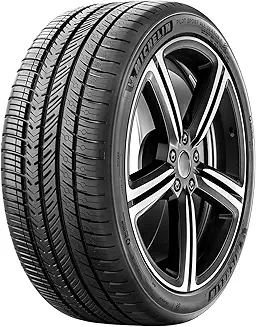
- Evolving Traction grooves deepen as the tread wears to maintain water evacuation
- Soybean oil compound resists stiffening in freezing temperatures
- 60,000-mile limited treadwear warranty
- Plush, quiet ride reported even on rough pavement
- Directional tread limits rotation to front-to-rear only
- Road noise ticks up after roughly 25,000 miles
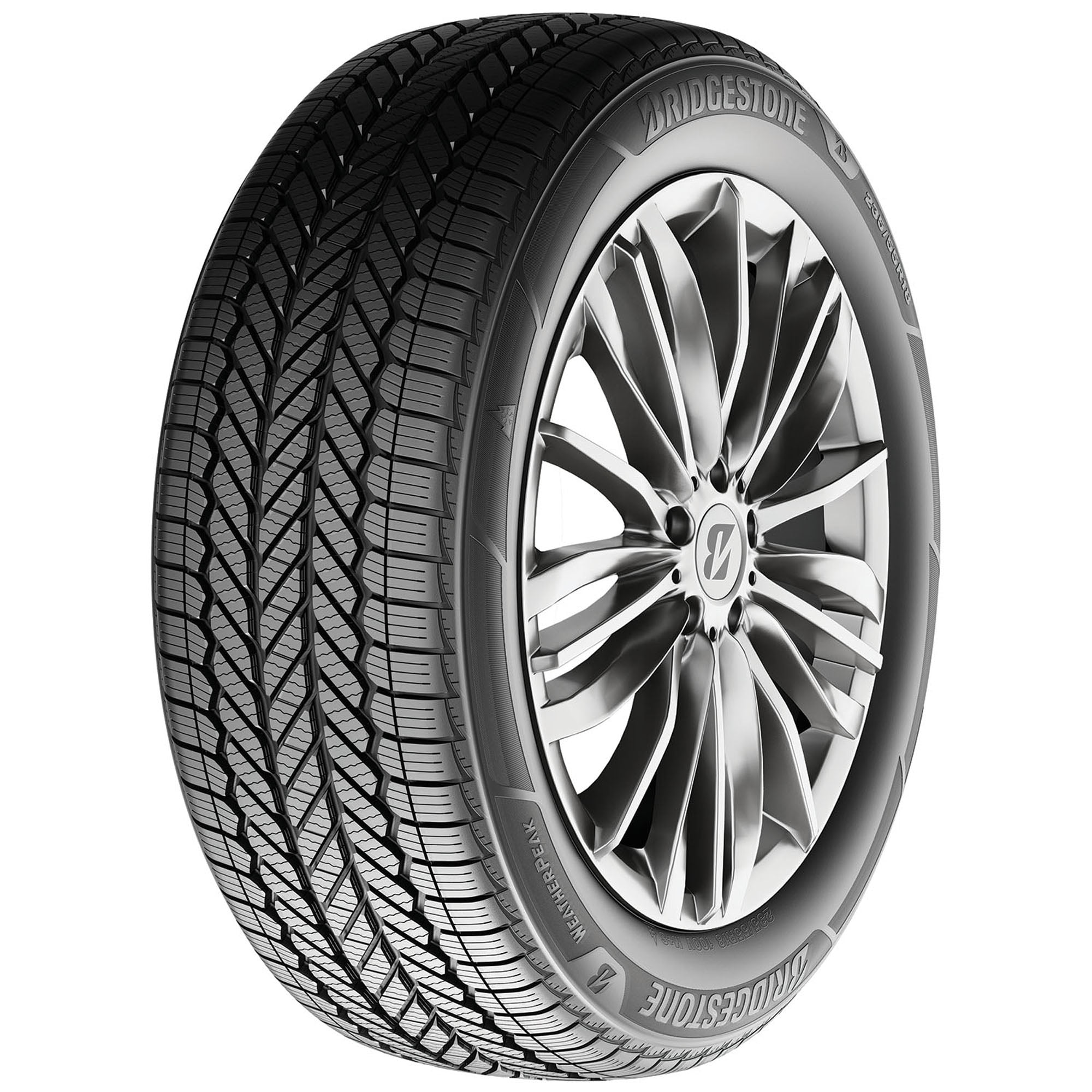
Bridgestone WeatherPeak
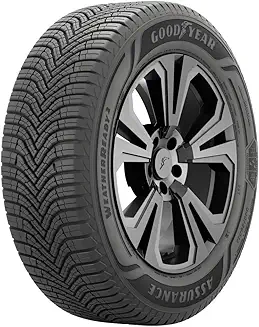
- Asymmetric, non-directional design eliminates mounting-direction mistakes
- Open shoulder grooves channel water and slush away quickly
- 55,000-mile limited treadwear warranty
- Balances smoothly with minimal wheel weights, per installer feedback
- Slight hum surfaces on certain grooved highway pavement
- Priced at the higher end of this comparison
Toyo Celsius II
- Wear-resistant compound holds up better than expected on heavy SUVs
- Symmetrical, non-directional tread simplifies rotation and mounting
- Multi-wave sipes add biting edges for snow and ice
- 60,000-mile limited treadwear warranty
- Ice braking distances trail the top two picks in this comparison
- Steering response feels conservative on dry roads
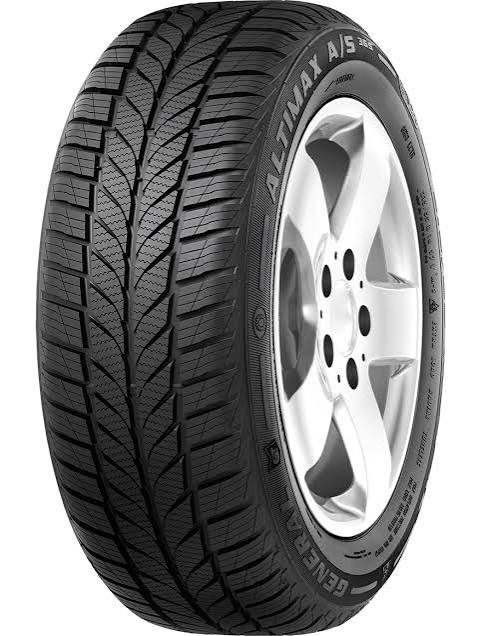
General AltiMax 365AW
- Symmetric, non-directional tread allows flexible rotation patterns
- Owners report noticeably less road noise than factory-fit tires
- 50,000-mile limited treadwear warranty
- Lowest per-tire price in this comparison
- Ice braking distances run longer than the premium options here
- Steering response feels numb during quick lane changes
Can’t Decide?
Our Top 2 Picks — Head to Head
Both are excellent all-weather tires. Here’s how to choose between them.
- Best all-around snow and ice grip in this comparison
- Quietest, most composed highway ride
- 60,000-mile warranty backed by slow, even wear
- Class-leading wet braking and hydroplaning resistance
- Traction grooves deepen as tread wears down
- Plush ride quality on rough pavement
How to Choose All-Weather Tires for Your Hyundai
Six factors that matter before you buy — explained simply.
Confirm the Snowflake Symbol
An “M+S” stamp only means a tire tolerates mud and light snow — it says nothing about ice or deep-snow braking. The Three-Peak Mountain Snowflake symbol certifies the tire passed a defined severe-snow traction test, and it’s the one marking that separates a genuine all-weather tire from an all-season tire with a winter-sounding name.
Match Your Hyundai’s Size and Load Index
The driver’s door jamb placard lists your Hyundai’s correct tire size, load index, and speed rating — not the sidewall of your current tires, which may already be undersized. A Palisade loaded with passengers and cargo needs a higher load index than an Elantra, and underrating that number risks casing overheating on long drives.
Verify the Speed Rating
Most Hyundai-fitted all-weather tires come in T or H speed ratings, which cover nearly every daily driver’s needs. Installing a tire rated below what your Hyundai specifies can alter handling feel, so match the placard rating rather than guessing based on the old set.
Choose Directional vs. Non-Directional Tread
Directional tires like the CrossClimate2 and Assurance WeatherReady clear water and slush aggressively but can only rotate front-to-back. Non-directional designs like the WeatherPeak and Celsius II allow side-to-side rotation, which helps even out wear patterns that show up on Hyundai’s independent rear suspension over time.
Decide on a Dedicated Wheel Set
All-weather tires are built to stay mounted year-round, but drivers in extreme snow regions sometimes still prefer a second wheel set for the harshest months. Mounting winter tires on a separate set of wheels lets you swap without paying for remounting every season, extending the life of both sets.
Budget for Professional Installation
Mounting and balancing require specialized shop equipment, typically running $15 to $25 per tire including a road force balance. That balance step matters more on a Hyundai than on many older vehicles, since the sensitive electric power steering system telegraphs even minor vibration straight through the wheel to your hands.
Pro Tips
Quick Buying Checklist
Always check the door placard, not the old sidewall, for the correct size and load index.
Request a road force balance to prevent vibration through your Hyundai’s electric power steering.
Rotate every 5,000–7,000 miles to keep tread wear even across all four corners.
Replace all four tires together so stability control isn’t fighting mismatched grip levels.
Consider new TPMS sensors if your Hyundai is past six years old.
Related Guides
Other Hyundai Tire-Type Guides
Frequently Asked Questions
What is the difference between all-season and all-weather tires for a Hyundai?
All-weather tires carry the Three-Peak Mountain Snowflake symbol, certifying they meet a minimum snow traction standard that most all-season tires never achieve. All-season rubber stiffens below roughly 45°F, cutting grip sharply. All-weather compounds stay flexible in the cold while still handling summer heat, so Hyundai owners avoid a seasonal swap.
Are all-weather tires safe for a Hyundai in heavy snow?
Yes — all-weather tires with the Three-Peak Mountain Snowflake symbol handle heavy snow confidently, though they don’t match a dedicated winter tire on solid ice. For drivers who see regular snow but don’t want seasonal changeovers, they strike the right balance, and owner threads on r/Hyundai consistently back this tradeoff.
How long do all-weather tires last on a Hyundai?
Most all-weather tires reach 45,000 to 60,000 miles with regular rotation and a proper alignment. The Toyo Celsius II and Michelin CrossClimate2 routinely hit the upper end of that range on Hyundai sedans and SUVs. Aggressive driving and skipped rotations shorten that lifespan considerably.
Will installing all-weather tires void my Hyundai’s warranty?
No. Fitting correctly sized all-weather tires that match Hyundai’s load index and speed rating specifications has no effect on your vehicle warranty. Only non-standard wheel offsets or incorrect tire sizes tend to raise suspension warranty questions, and standard-sized replacements avoid that issue entirely.
Are premium all-weather tires worth the extra cost over budget options?
Yes, if ice braking distance, wet grip, and cabin quiet matter to you. Tires like the Michelin CrossClimate2 and Goodyear Assurance WeatherReady stop noticeably shorter in wet or icy conditions than budget options. That performance gap often costs less than a single insurance deductible.
Can I rotate all-weather tires myself on my Hyundai?
Rotating already-mounted wheel assemblies at home is realistic with a jack, stands, and the correct pattern for your tread type. Mounting a new tire onto a wheel, though, needs a tire machine and balancer. Handle rotations yourself if comfortable, but leave initial mounting to a shop.
Do I need new TPMS sensors when installing all-weather tires?
Not necessarily — sensors typically last five to seven years, so healthy ones can carry over. If your Hyundai is older or a sensor already reads a low battery, replacing it during installation saves a second dismount later. Ask your installer to check battery status first.
Final Verdict
Our Top Recommendations for 2026
The Michelin CrossClimate2 remains the safest all-around choice for Hyundai owners who want one tire to cover every season. If budget matters more, the General AltiMax 365AW delivers real snow certification without the premium price tag, while the Goodyear Assurance WeatherReady is the tire to reach for if heavy rain worries you more than snow.