The Tucson’s engine lineup splits unevenly, and the spark plug shopping list follows suit: four of the six plugs on this list exist because the mainstream 2.0L and 2.4L GDI engines cover most Tucsons on the road, while the 1.6L Turbo in Eco and Sport trims needs an entirely different heat range. After sorting owner reports and Hyundai forum threads by engine rather than by trim, that four-to-two split became the clearest signal in the data, and it shaped the whole structure of this guide.
The 2.0L/2.4L GDI engine runs a heat range 7 plug gapped to 0.044 inches, while the 1.6L Turbo needs a colder heat range 8 plug at 0.028 inches. Get it backwards and the mismatch shows up fast — often as a cylinder-specific P0303 misfire rather than a vague rough idle.
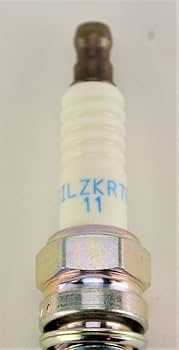
For the 2.0L or 2.4L Theta II GDI engine, the NGK 9723 SILZKR7B11 Laser Iridium is the exact factory plug. For the 1.6L Turbo Gamma engine, the NGK 97331 SILZKR8E6S Laser Iridium is the correct colder-range replacement. Check your emissions sticker or owner’s manual before ordering — the two are not interchangeable, and getting them backwards risks pre-ignition or fouling depending on which way you’re off.
Our Top 6 Spark Plug Rankings
- NGK 9723 SILZKR7B11 Laser Iridium— Best Overall (2.0L/2.4L GDI)
- NGK 97331 SILZKR8E6S Laser Iridium— Best Overall (1.6L Turbo)
- NGK 92410 LKR7AHX-S Ruthenium HX— Best Premium (2.0L/2.4L GDI)
- Denso 3454 Iridium TT— Most Durable (2.0L/2.4L GDI)
- Bosch 96323 FR8DPP33+— Best Budget & Easy Install (2.0L/2.4L GDI)
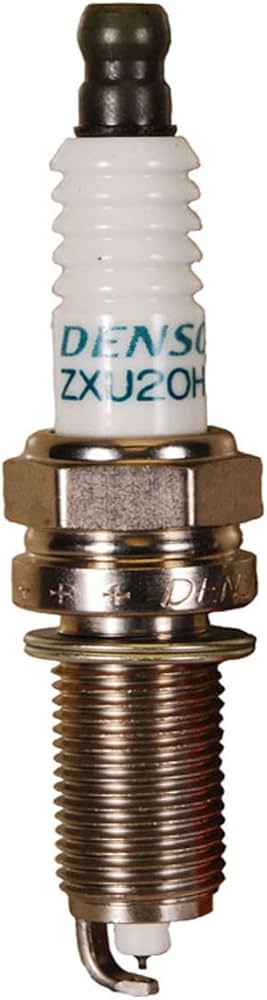
- Denso 3473 ZXU20HCR8— Best Budget (1.6L Turbo)
Best Spark Plugs for the Hyundai Tucson — Compared
All six plugs side by side, ranked by overall performance. Match the Engine Fit and heat range to your specific Tucson before ordering anything — four of these fit the mainstream GDI engine, two fit the turbo.
| # | Product | Electrode | Engine Fit | Best For | Score | |
|---|---|---|---|---|---|---|
| 1 | NGK 9723 SILZKR7B11 Editor’s Choice | Laser Iridium / Platinum | 2.0L/2.4L Theta II GDI | Exact OEM mainstream match | 4.7 | See Latest Price |
| 2 | NGK 97331 SILZKR8E6S Top Pick | Laser Iridium / Platinum | 1.6L Gamma Turbo GDI | Exact OEM turbo match | 4.7 | See Latest Price |
| 3 | NGK 92410 LKR7AHX-S | Dual Fine-Wire Ruthenium | 2.0L/2.4L Theta II GDI | Long-term coil-friendly upgrade | 4.6 | See Latest Price |
| 4 | Denso 3454 Iridium TT | Twin-Tip Iridium / Platinum | 2.0L/2.4L Theta II GDI | 100k-mile high-mileage use | 4.6 | See Latest Price |
| 5 | Bosch 96323 FR8DPP33+ Budget Pick | Double Platinum | 2.0L/2.4L Theta II GDI | First-time DIY install | 4.5 | See Latest Price |
| 6 | Denso 3473 ZXU20HCR8 | Twin-Tip Iridium / Platinum | 1.6L Gamma Turbo GDI | Lower-cost turbo iridium | 4.5 | See Latest Price |
Detailed Reviews
Full breakdown of each plug — ratings, pros, cons, and exactly which Tucson engine it fits. Every card below draws on owner-reported mileage and misfire history rather than spec-sheet claims alone.
NGK 9723 SILZKR7B11 Laser Iridium
NGK builds this exact plug to Hyundai’s heat range 7 specification for the Theta II GDI engine, which covers the vast majority of Tucsons on the road today. The direct-injection system runs harder on spark plugs than a port-injected engine does, and this plug’s laser-welded iridium tip is built specifically to hold up under that higher compression rather than being a generic plug adapted to the job.
BEST FOR: 2.0L/2.4L Theta II GDI Tucson- Matches the factory 0.044-inch gap exactly
- Cleared a reported P0303 cylinder-3 misfire on a 90,000-mile Tucson
- Rated for a 100,000-mile service interval
- Trivalent coating prevents thread seizure in the aluminum head
- Counterfeit listings circulate from unauthorized third-party sellers
- A few boxes ship with a bent electrode tip
- Not the correct heat range for the 1.6L Turbo engine
NGK 97331 SILZKR8E6S Laser Iridium
The 1.6L Turbo Gamma engine in Eco and Sport trims runs meaningfully hotter combustion than the naturally aspirated Theta II, which is why this plug uses a colder heat range 8 rating instead of the standard heat range 7. Installing the wrong range here isn’t a minor mismatch — it’s the difference between a stable spark and pre-ignition under sustained boost.
BEST FOR: 1.6L Gamma Turbo GDI Tucson- Matches the factory 0.028-inch gap exactly
- Eliminated a reported high-boost misfire on a tuned 1.6T
- Heat range 8 prevents pre-ignition under sustained boost
- Direct OEM replacement with no gap adjustment needed
- Expensive compared to plugs for naturally aspirated engines
- Fragile fine-wire tip requires careful handling during install
- Not interchangeable with the 2.0L/2.4L GDI engine
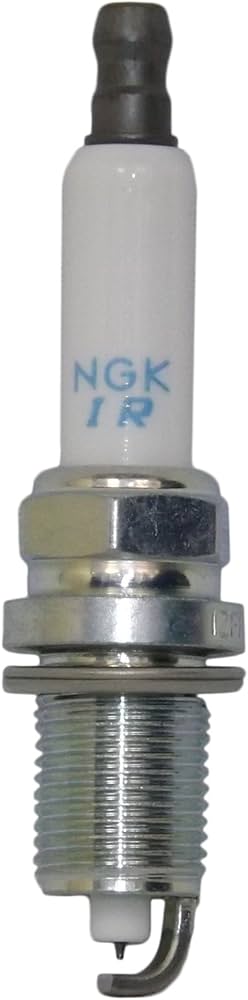
NGK 92410 LKR7AHX-S Ruthenium HX
Ruthenium resists oxidation better than the iridium used in the standard NGK 9723, and this plug pairs it with a dual fine-wire design on both electrodes. The lower firing voltage that results eases the load on ignition coils that have already been working through years of direct-injection duty, which matters more on a Tucson you plan to keep well past its first coil replacement.
BEST FOR: 2.0L/2.4L Theta II GDI Tucson- Ruthenium alloy outlasts standard iridium electrodes
- Dual fine-wire tips lower voltage demand on aging coils
- Owners report noticeably sharper throttle response after install
- Projected square platinum pad improves flame kernel development
- Most expensive plug on this list per unit
- Availability on Amazon can be inconsistent
- Gains over the standard NGK 9723 are marginal on a stock engine
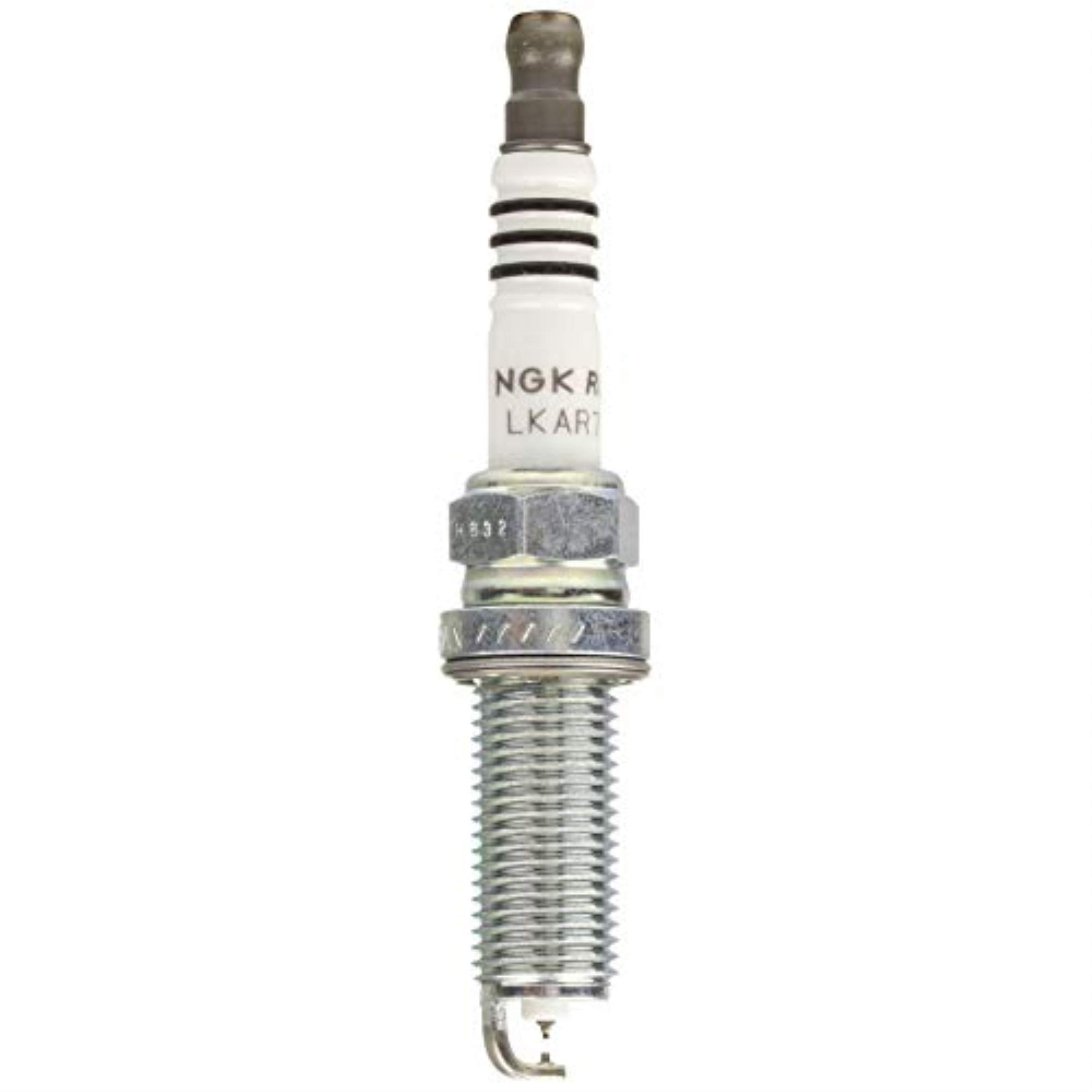
Denso 3454 Iridium TT
Denso places a 0.4mm iridium tip on both the center and ground electrodes here, which keeps the gap stable across the full 100,000-mile interval instead of one side eroding faster and widening early. That even-wear behavior is exactly what shows up in the highway fuel economy reports from owners who put serious miles on their Tucson between services.
BEST FOR: 2.0L/2.4L Theta II GDI Tucson- 0.4mm twin-tip design wears evenly on both electrodes
- Owners report smooth performance past 95,000 miles with no misfire
- Small but measurable highway fuel economy improvement reported
- Direct fit for both the 2.0L and 2.4L Theta II engines
- Priced above the standard NGK 9723
- A few reports of the ground electrode gap measuring slightly off on arrival
- Overkill if you trade the Tucson in before 60,000 miles
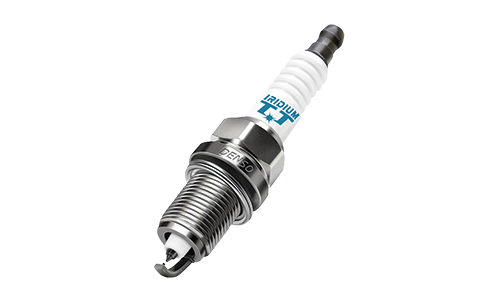
Bosch 96323 FR8DPP33+
Bosch rolls the threads on this plug rather than cutting them, so it starts by hand without the slight resistance some cut-thread designs have. Combined with a nickel-plated shell and a pre-set factory gap, it’s built to remove every point of hesitation a first-time DIYer might run into while pulling ignition coils for the first time.
BEST FOR: 2.0L/2.4L Theta II GDI Tucson- Threads in by hand with zero resistance
- Pre-gapped to 0.044 inches, no adjustment needed
- A full set of four costs a fraction of the iridium options
- Bosch’s OEM supplier reputation backs the build quality
- Service life caps around 60,000 miles, shorter than iridium
- Packaging sometimes lacks individual plug protection in transit
- Not rated for the turbocharged 1.6L engine
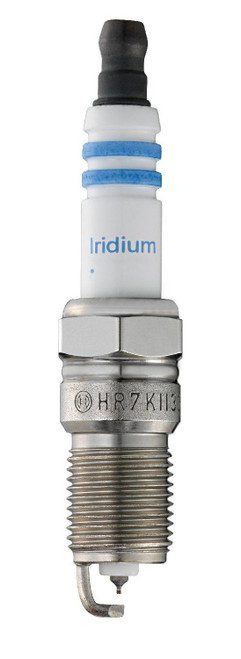
Denso 3473 ZXU20HCR8
Denso brings its twin-tip iridium construction to the turbo engine at a price below the NGK 97331, matching the same heat range 8 and 0.028-inch gap without cutting corners on the electrode design. It carries fewer reviews than the NGK simply because fewer Tucsons on the road are turbocharged, not because the part itself is unproven.
BEST FOR: 1.6L Gamma Turbo GDI Tucson- More affordable than the OEM NGK 97331
- Twin-tip design provides even wear on both electrodes
- Pre-gapped to 0.028 inches, matching the turbo spec exactly
- Owners report immediate resolution of an existing intermittent misfire
- Far fewer reviews than the NGK 97331
- Some owners prefer NGK’s laser-welded design for long-term durability
- Availability can vary by season on Amazon
- No long-term 100,000-mile track record yet in the Tucson community
Can’t Decide?
Our Top 2 Picks — Head to Head
Both score identically and both are genuine OEM-spec matches, but they fit opposite ends of the Tucson lineup — confirm your engine before choosing either one.
- Fits the mainstream 2.0L/2.4L Theta II GDI engine
- Pre-gapped to 0.044 inches, heat range 7
- The most-reviewed plug for this engine by far
- Fits the 1.6L Gamma Turbo GDI engine only
- Pre-gapped to 0.028 inches, heat range 8
- Engineered to prevent pre-ignition under boost
How to Choose the Right Spark Plug for Your Tucson
Six factors that matter before you buy — explained simply, with the specific heat range and gap numbers for both engine families already worked in.
Identify Your Engine Family First
The 2.0L and 2.4L Theta II GDI engines need a heat range 7 plug gapped to 0.044 inches, while the 1.6L Turbo Gamma engine needs a colder heat range 8 plug gapped to 0.028 inches. Check the emissions sticker under the hood or your owner’s manual to confirm which one you have before ordering anything.
Choose the Right Electrode Material
Direct injection creates a harsher environment for spark plugs than older port-injected engines, and copper plugs simply don’t hold up to it. Iridium and ruthenium plugs last up to 100,000 miles in this application, while double platinum plugs top out closer to 60,000 miles. For a GDI engine, iridium is the safer long-term default.
Never Re-Gap Fine-Wire Plugs
The NGK laser iridium and ruthenium plugs on this list use a delicate center electrode that can crack under a feeler gauge if you try to adjust it yourself. Every plug recommended here ships pre-gapped to the exact factory specification for its engine — install it as it arrives and leave the gap alone.
Replace All Four Plugs as a Set
Spark plugs wear together across all four cylinders, even when only one is currently throwing a misfire code. Mixing a worn plug with a fresh one causes uneven combustion and can produce a cylinder-specific code on the new plug that has nothing to do with the part itself. Always buy and install a full set of four.
Inspect Ignition Coils — A Common Failure Past 100k
Theta II engines are known for coil failures becoming more frequent once mileage climbs past the 100,000-mile mark, and a weak coil will stress a brand-new plug the same way it stressed the old one. While the coils are already out for the plug swap, check each boot for cracks or white carbon tracking and replace any that look questionable.
Torque to Spec on the Aluminum Head
Tighten spark plugs to the factory 15–22 ft-lb specification using a 5/8-inch or 14mm magnetic spark plug socket, and stop there — over-tightening cracks the ceramic insulator just as easily as under-tightening causes a compression leak. Skip the anti-seize on modern NGK or Bosch plugs; their trivalent coating already handles that job.
Pro Tips
Quick Buying Checklist
Confirm heat range 7 vs. 8 before ordering — a heat range 8 plug will foul in the non-turbo engine.
Skip the anti-seize on plated threads — it throws off your torque reading and can damage the head.
Never re-gap a laser iridium or ruthenium plug — the fine-wire tip cracks under a feeler gauge.
Fix any valve cover leak first — oil dripping into the spark plug tubes will foul new plugs fast.
Always replace the full set of four — mixing old and new plugs causes uneven combustion.
Related Guides
Other Hyundai SUV Spark Plug Guides
Also On CarAssists
More Guides for This Vehicle
Frequently Asked Questions
What spark plugs does a Hyundai Tucson need?
It depends on the engine. The 2.0L and 2.4L Theta II GDI engines need the NGK 9723 SILZKR7B11, gapped to 0.044 inches. The 1.6L Turbo Gamma engine needs the NGK 97331 SILZKR8E6S, gapped to 0.028 inches. Confirm your engine before ordering, since the two are not interchangeable.
How do I know if my Tucson has the 2.0L, 2.4L, or 1.6L Turbo engine?
Check the emissions sticker under the hood, which lists the exact displacement and whether it’s turbocharged. As a rough guide, base SE and SEL trims typically run the non-turbo Theta II, while Eco, Sport, and N Line trims often carry the 1.6L Turbo — but always confirm with the sticker or your VIN rather than the trim badge alone.
Can I use the 2.0L/2.4L spark plug in my 1.6L Turbo Tucson?
No. The 2.0L/2.4L engine uses a hotter heat range 7 plug with a wider 0.044-inch gap, while the 1.6L Turbo needs a colder heat range 8 plug at 0.028 inches. Installing the wrong heat range risks pre-ignition in the turbo engine or fouling in the naturally aspirated one.
Why does my Tucson keep throwing a P0303 code after a spark plug change?
A repeat cylinder-3 misfire after a plug change usually points to an incorrect gap, a cracked ignition coil boot that was reused, or a plug with the wrong heat range for your engine. Pull the plug from cylinder 3 specifically and check its gap and condition before assuming the part itself is defective.
Is it worth upgrading to Ruthenium HX plugs in a Tucson?
For a stock daily driver, the gains over standard laser iridium are modest. The ruthenium alloy’s real advantage shows up in reduced strain on aging ignition coils and slightly longer service life, which matters most if you’re planning to keep the Tucson past 150,000 miles rather than trade it in early.
How often should I change spark plugs in a Hyundai Tucson?
Hyundai rates iridium plugs for roughly 100,000 miles under normal driving. Double platinum plugs like the Bosch 96323 should be replaced closer to 60,000 miles instead. Check your owner’s manual for the exact interval listed for your specific model year and engine.
Should I replace ignition coils when I replace spark plugs on a high-mileage Tucson?
Not automatically, but it’s worth inspecting. Theta II engines commonly see coil failures increase once mileage passes 100,000, and a weak coil will shorten a brand-new plug’s life the same way it shortened the old one. If any boot shows cracking or carbon tracking, replace that coil in the same visit.
How difficult is it to change spark plugs on a Hyundai Tucson?
It’s a straightforward job on either engine. The plugs sit under the ignition coil packs on top of the engine, with no intake manifold to remove. A spark plug socket, an extension, and a torque wrench are all you need, and most owners finish in 30 to 45 minutes.
Final Verdict
Our Top Recommendations for 2026
The Tucson’s spark plug decision comes down to which of its two engine families is under your hood — everything else on this list is a variation within that choice. Confirm your heat range and gap first, then pick based on how long you plan to keep the SUV and how much maintenance you want to do along the way. Getting the engine identification right the first time avoids most of the misfire codes owners report after a rushed plug swap.